
Powel Oyugi says the acid in his chest is so bad he is afraid he will be found dead in his sleep. His children are out of school. His cars are gone. Friends and micro-lenders want his household goods auctioned. Thirty people who once worked for him have no jobs. The supplier in India still holds customised fabric paid for three years ago, storage charges eating what is left of a KSh 2 million deposit. And the same bank that froze his working capital, reversed an international transfer to pay itself, listed him on CRB, and then auctioned the premises it rented to him as landlord, is still holding his land.
That is the account he sent to Ndung’u Nyoro this morning. Nyoro published it, told KCB Group it had lost him as a client, and later posted a second plea: do not let this young man take his life. The comments filled with people saying they are closing accounts. The story is one man’s version, still before a court. The pattern around it is not.
In 2023 Powel Jea Enterprise Limited was buying t-shirt fabrics from India. Order value: KSh 5.92 million. He paid a KSh 2 million deposit in person. He was already servicing a KCB loan of about KSh 550,000 a month and says he was current. He had cash.
Back in Nairobi he sent KSh 1 million by PesaLink and burned KSh 31,000 on exchange. From his KCB account he RTGS’d KSh 1.92 million. He withdrew nearly a million from Sidian, walked into KCB Two Rivers, deposited KSh 900,000 and sent that too. The supplier then said the last two transfers were not accessible and asked for a TT letter confirming the buyer.
At KCB Jogoo Road, assistant manager Kevin told him the letter would crawl through a correspondent bank. Better to recall the money and resend from the company account. Powel signed the recall letter. Branch manager Eunice saw him on the way out, said the recall was a mistake because the funds would convert from dollars into shillings and he would lose on the rate, and had Kevin draft a cancellation. Powel signed that too. They told him to go home and relax.
A week later the supplier said the money had been recalled. The bank said it was sitting with a middle bank in the United States. Then silence. Two months. Daily visits. A lawyer’s 72-hour demand letter. Ignored. The loan account slipped into arrears because the capital that was supposed to keep the factory running was trapped inside the same institution that wanted its instalments.
One evening around 5 p.m. the statement moved. A deposit appeared. Loans were marked fully repaid. The KSh 1.9 million had been reversed and applied against KCB’s own book. The next morning the supplier confirmed he had received the KSh 900,000. Working capital split in two. Production stalled. Customised goods sat in India. Storage started ticking.
Powel went to court in August 2023 asking that the bank be ordered to complete the transfers so he could finish the order and service the very loans the bank had just paid itself from his money. He says the bank skipped hearing dates. When the court finally adopted the file and set judgment for 28 August 2026, KCB applied to reopen. The court allowed it. Next date: 9 December 2026. Three years and counting.
While the case crawled, the same KCB that owned the Jogoo Road premises he rented auctioned the company’s assets for rent arrears, arrears that existed because the bank had immobilised the cash that paid the rent. Landlord and lender, collector and executioner, in the same building.
He says they still hold his land, still list him on CRB despite court orders to delist, and still demand he pay loans they already recovered by reversing his own outbound transfers.
Kenyan courts have already described what KCB did with other people’s money.
In January 2026 the High Court in Lodwar found that KCB unlawfully reversed KSh 5.56 million from Ekanyarit Atoo Enterprises without notice. Once money is credited, the court said, it is the customer’s property. The bank has no right to use it unless there is a mandate, a court order, or a statute. The judge awarded general and aggravated damages of KSh 2.5 million and called the conduct a breach of the bank-customer relationship of trust.
In another High Court matter, Justice Okwany awarded Mua and Company and Evans Mukunga Mua KSh 3.7 million after finding KCB had overcharged a KSh 640,000 facility, failed to account for payments, and issued unlawful auction threats. The bank had even admitted overcharging in a 2003 letter. The court ordered the charges on the properties discharged and dismissed the bank’s counterclaim.
Wrongful or sticky CRB listings keep surfacing. Prominent lawyer Danstan Omari sued after KCB listed him over a 2015 loan he says was repaid, and in one version over an account that was not even his. Other borrowers have won or pursued findings that listings were made without the required adverse-action notices or left uncorrected after settlement. A listing that will not die is not a clerical error. It is a commercial weapon.
The auction machine runs in parallel. Courts have recently backed or allowed KCB recoveries against the White Rhino Hotel in Nyeri over KSh 520 million, Cytonn’s Cysuites over KSh 426 million, a 67-acre Nyandarua farm, a Kilimani apartment, and assets of former Spencon directors worth KSh 1.35 billion. A separate Naivasha land auction from 2017 has ballooned into a KSh 1.3 billion claim after Kenya Railways refused transfer because rates were unpaid. The legal standard is usually that you can sue for damages later. For a trader whose entire working capital is already gone, later is a luxury.
The method is consistent. Process the customer’s money first for the bank’s own book. Delay the courtroom. Keep the CRB listing live. And if you also happen to be the landlord, collect twice.
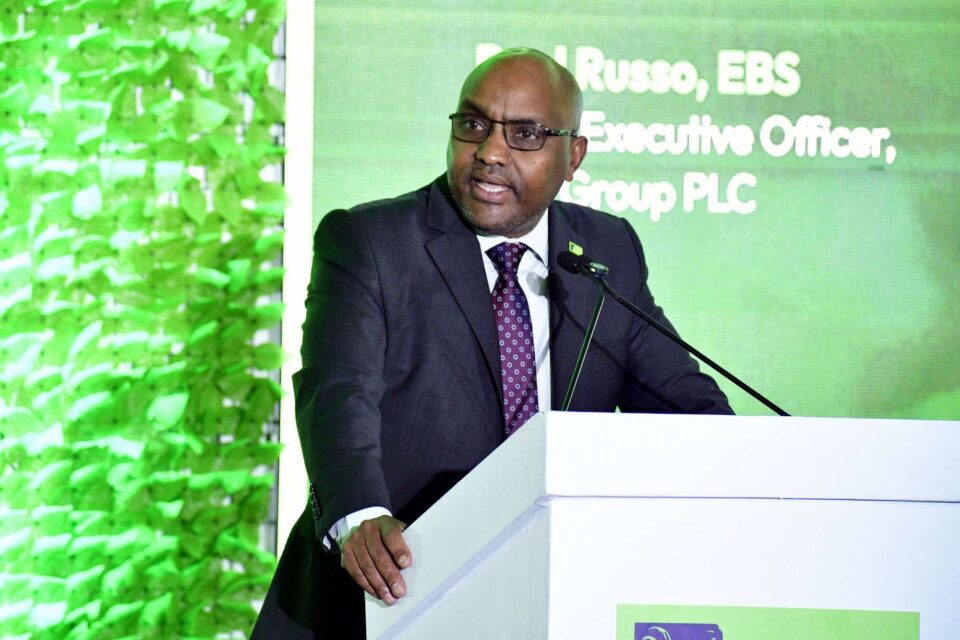
While Powel’s children left school, KCB Group posted a record KSh 68.4 billion profit after tax for 2025 and declared KSh 22 billion in dividends. Assets sit above KSh 2.1 trillion. CEO Paul Russo speaks of the continued trust that customers place in us and a slogan that still reads For People. For Better. Kenya MD Annastacia Kimtai runs the local franchise.
Weeks before Nyoro’s posts, the same institution buried Rosemary Chemutai Koech Kimwatu, its Head of Data Protection. She died by suicide at her Ngong home on 21 August 2026. Colleagues and subsequent reporting described months of alleged workplace bullying by Group Chief Risk Officer Faith Basiye, crushing workload, public humiliation, and a written complaint to HR that was copied to Kimtai and Russo. The family also spoke of marital and debt pressure. The bank issued an obituary. Independent investigators and activists demanded preservation of emails and logs. The official line stayed thin. A senior compliance officer is dead. A SME owner is writing that he is the same as dead. The leadership layer is the same.
That is the detail mainstream coverage of KCB’s strong performance rarely sits next to the dividend announcement.
KCB has not issued a public statement on Powel Oyugi as of this writing. The standard defence in these files is that recoveries were contractual, notices were served, valuations were done, and any loss can be compensated in damages. Sometimes courts agree. Sometimes they do not. The January 2026 reversal judgment and the Mua overcharge award are already on the record.
Powel is not a saint in every file. A separate small-claims dispute, Spirit Company Limited versus Oyugi trading as Powel Jea Enterprise, shows he has also been on the other side of undelivered contracts. That does not authorise a bank to trap an international payment, apply it to its own loan, starve the business, then auction the tenant’s stock as landlord. Those are distinct acts.
He has asked the Central Bank of Kenya to intervene. CBK already has a consumer-complaints channel and has previously been forced to confront lender harassment after a digital-loan suicide. Whether it treats a correspondent-bank bungling plus self-help reversal plus landlord auction as a supervision issue, or as another private lawsuit, will tell you how much protection an SME actually has when the counterparty is the country’s largest bank by assets.
Nyoro did what large media houses often will not. He put the raw letter in front of hundreds of thousands of people before the December hearing. The comments are not polite. They are people who have seen the same playbook: the sudden reversal, the CRB that will not lift, the auction notice that arrives while a restructuring discussion is still open.
Powel’s last line in the message Nyoro published is the one that should sit on the desk of every KCB board member who just approved another record payout.
I am just afraid I might die and the world will not know what killed me.
The world knows the name of the bank. The court date is 9 December 2026. The chest pain is now.
There's no story that cannot be told. We cover the stories that others don't want to be told, we bring you all the news you need. If you have tips, exposes or any story you need to be told bluntly and all queries write to us [email protected] also find us on Telegram
