

The glowing “M-Pesa pioneer” profiles omit a Sh1.4 billion judgment, disputed SportPesa payment transfers and a controversial Safaricom data operation in which his name appears
A polished media narrative is rapidly taking shape around Absa executive Sitoyo Lopokoiyit.
Recent profiles portray him as the pioneering fintech executive who helped build M-Pesa before moving to Absa as chief executive of Personal and Private Banking.
Business Day and Business Daily have focused heavily on his rise, from his early career to the 2007 M-Pesa launch and his transformation into a senior African banking executive.
But the difficult chapters of his Safaricom career are largely missing.
And those omissions matter.
The Sh1.4 billion M-Pesa judgment
The biggest omission is the High Court’s May 8, 2026 judgment in Muoki & another v Safaricom PLC.
Justice Josephine Mong’are ordered Safaricom to pay innovator Peter Nthei Muoki and Beluga Limited Sh1.400067 billion, plus interest and a continuing royalty of 0.5 percent of gross M-Pesa revenue for as long as Manage Child Account, M-Pesa Go or a substantially similar service remains operational.
The dispute centred on Muoki’s M-Teen Mobile Wallet, a parental-control USSD concept developed in 2020.
After initially approaching Safaricom, Muoki took the detailed concept to executives, including Lopokoiyit, who was then in Safaricom’s financial-services leadership and became M-Pesa Africa MD in April 2021.
Safaricom subsequently launched Manage Child Account in November 2022.
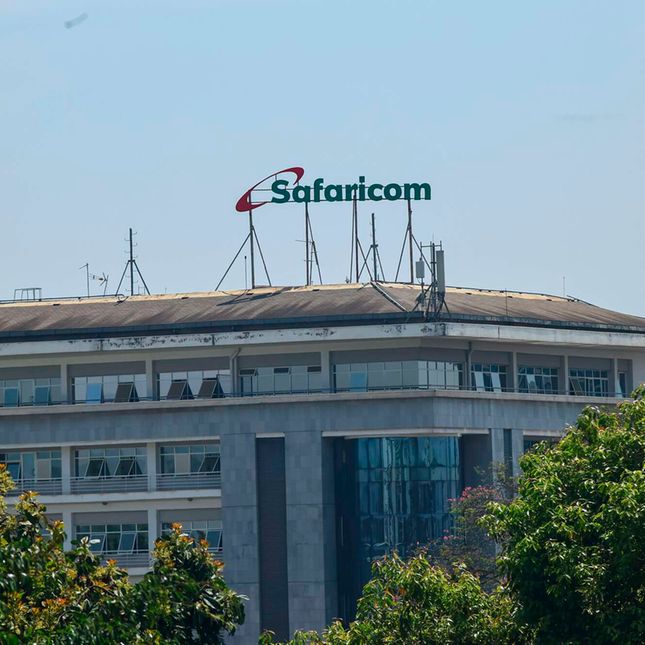
The court found the plaintiff’s account of the June 2021 disclosure uncontroverted and ultimately found Safaricom liable for copyright infringement.
Lopokoiyit was not personally sued or ordered to pay the damages.
But his place in the chronology is important and cannot honestly be airbrushed from his biography.
Safaricom has appealed the judgment.
The SportPesa money trail
Another largely ignored controversy concerns allegations surrounding SportPesa-related Paybills and short codes.
Various reports have alleged that payment infrastructure associated with Pevans East Africa was transferred to Milestone Games, with the disputed transactions involving sums running into more than Sh2.3 billion.
The allegations have also raised questions about preservation orders, ownership disputes and the governance of Safaricom’s payment infrastructure.
Lopokoiyit’s name has appeared in reporting around the controversy.
There have also been allegations of a family connection between him and Ronald Karauri, a major figure associated with SportPesa.
That relationship has not been established by a court as evidence of wrongdoing by Lopokoiyit, and the paybill allegations have not resulted in a definitive judicial finding of personal liability against him.
But one question remains stubbornly unanswered:
Was any potential conflict disclosed to Safaricom, and what safeguards were put in place before the disputed payment infrastructure moved?
The Sh50,000 data-breach trail
Then comes the Safaricom data controversy involving allegations over 11.5 million subscriber records.
Court-related material cited in investigative reporting identifies a Sh50,000 M-Pesa transfer made on May 25, 2019 by Safaricom’s then head of ethics and compliance, Patrick Kinoti M’Arithi, to businessman Benedict Kabugi Ndungu.
Kabugi’s account placed Lopokoiyit among Safaricom officials involved in an operation to trace sensitive customer data allegedly linked to SportPesa.
A June 2019 demand letter reportedly named both Kinoti and Lopokoiyit.
The allegations remain disputed.
Lopokoiyit has not been convicted of wrongdoing in the matter.
But the Sh50,000 transaction itself has a sender, recipient and date. It is not a fictional detail that can simply disappear from the record.
The rehabilitation campaign
The timing is revealing.
Absa announced Lopokoiyit’s appointment in February 2026.
He then became the subject of increasingly favourable profiles portraying him as the fintech visionary who spent 19 years “disrupting banks”.
Business Day, Business Daily and other outlets have repeatedly amplified the pioneer narrative.
Yet the same period has seen the unresolved Safaricom controversies continue to generate questions.
The result is a remarkably clean public biography sitting alongside a considerably messier documentary record.
That does not prove a conspiracy to rehabilitate him.
But it does demonstrate how easily corporate profiles can become selective histories.
The questions Absa cannot permanently avoid
Lopokoiyit’s achievements at M-Pesa are real.
So are the unanswered questions.
Did Absa’s due diligence fully examine the pending Safaricom copyright case?
Did it investigate the SportPesa payment-infrastructure allegations and any potential conflict?
Did it review the data-breach material in which Lopokoiyit’s name appears?
And what exactly did regulators receive during the fit-and-proper assessment?
These are legitimate questions for an executive now entrusted with a major banking franchise.
The issue is not whether Sitoyo Lopokoiyit built M-Pesa.
He did.
The issue is whether the “M-Pesa pioneer” mythology is being used to bury the uncomfortable chapters of the same career.
A Sh1.4 billion judgment cannot be erased by a flattering profile.
Neither can a disputed Sh2.3 billion payment trail.
And neither can a documented Sh50,000 transaction sitting inside a controversial data investigation.
The real test of Sitoyo’s legacy is whether he can account for the chapters his rehabilitation tour would rather leave unread.
There's no story that cannot be told. We cover the stories that others don't want to be told, we bring you all the news you need. If you have tips, exposes or any story you need to be told bluntly and all queries write to us [email protected] also find us on Telegram
