
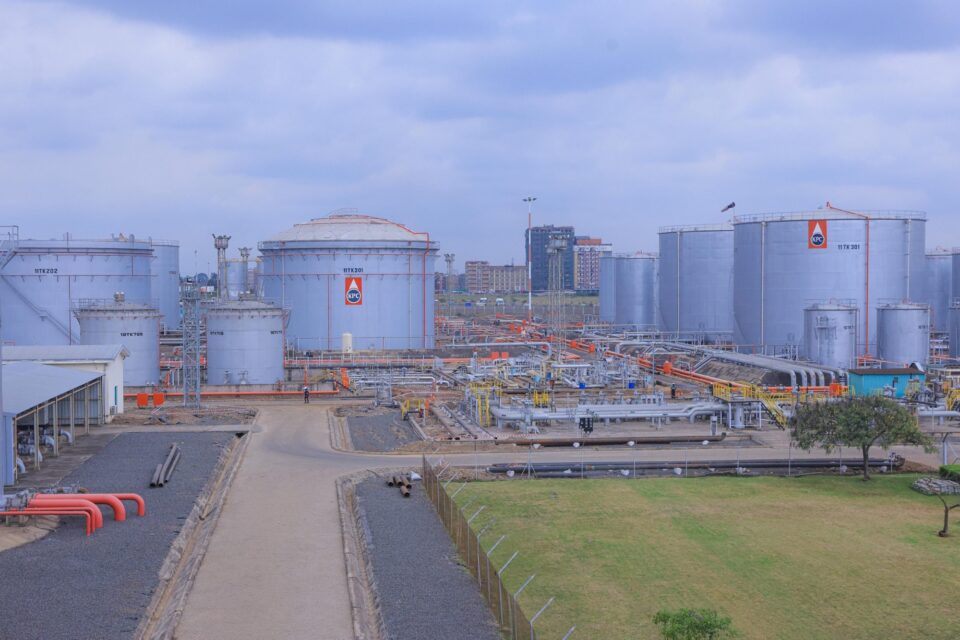
For more than a decade, the name Zakhem has remained attached to one of Kenya’s most expensive and most persistent pipeline disputes.
The Lebanese-linked contractor won Kenya Pipeline Company’s multibillion-shilling Line 1 replacement tender in 2014. What was presented as an 18-month construction project became a four-year saga, followed by years of litigation, tax claims, settlements, garnishee orders, subcontractor disputes and billions of shillings changing hands through the courts.
Now, after another claim worth about Sh10.9 billion, Kenya Pipeline Company is accusing the contractor of something more serious than simply pursuing an unpaid bill.
KPC says Zakhem is moving or concealing value through third parties, including its advocates, and wants the High Court to force the foreign contractor to put up Sh265 million in a joint NCBA account before its latest claim can proceed.
The allegations have not been proved at trial.
But they land against an extraordinary judicial history.
In 2023, the High Court found that Zakhem was a Cyprus-registered foreign company with no known assets in Kenya, a fact the company did not deny at the time. The finding was made in proceedings brought by Oilfields Engineering, which was attempting to secure money due to it from Zakhem.
The same company is now asking the Kenyan courts to award it another US$84.1 million, approximately Sh10.9 billion, from KPC.
The new claim has turned what was already a long-running contractual battle into a question about where Zakhem’s money is, who controls it and whether there will be anything left in Kenya if its claims ultimately fail.
A Sh10.9 billion claim after a supposedly final settlement
Zakhem’s latest suit, HCCOMM E346 of 2026, seeks US$84,117,441.16 from KPC.
The claim consists of approximately US$19.04 million for extension-of-time costs and another US$65.08 million in interest on delayed payments. KPC disclosed the litigation to shareholders in June 2026 and said it had credible legal and factual grounds to contest it.
The arithmetic is striking.
The interest component alone is more than three times the extension-of-time claim.
Zakhem says KPC failed to honour contractual payment obligations after completion of the Line 1 Replacement Project. The contractor says the project was substantially completed in January 2018 and that it subsequently obtained a defects-liability certificate. It further claims that financing costs ballooned after it borrowed approximately US$127.5 million to sustain project operations.
KPC disputes the claim.
Its defence is built around an uncomfortable question for Zakhem: how can a company that has spent years pursuing KPC for billions be treated as a creditor worth protecting when other Kenyan contractors say they have struggled to recover their own court-awarded money from it?
That is now at the centre of KPC’s application for security.
The contractor that won the Sh43 billion job
Zakhem emerged top of the 2014 evaluation for the new Mombasa-Nairobi petroleum products pipeline.
Contemporaneous reporting put its bid at roughly Sh43 billion, substantially below KPC’s engineer’s estimate of about Sh53 billion. Zakhem reportedly scored 95.5 percent and beat six competitors. Losing bidders challenged the award before procurement authorities. (Business Daily Africa)
The challenges did not stop the contract.
Parliament subsequently examined the procurement and the project. The Public Investments Committee summoned Zakhem officials as questions mounted over the tender and subsequent project delays.
KPC’s own 2014 documentation confirms that the Line 1 replacement contract had been awarded to Zakhem and that the contractor was responsible for construction and associated works along the Mombasa-Nairobi route.
The contract was supposed to be completed in approximately 18 months.
Instead, the project took about four years.
And the financial dispute that followed would prove almost as enduring as the pipeline itself.
The first billions
By 2018, Zakhem was demanding additional money over delays.
Business Daily reported at the time that the contractor had sought about US$189.2 million, then approximately Sh18.9 billion, in additional claims. Parliament intervened and the payments became a political and financial controversy.
Zakhem eventually sued KPC.
On June 16, 2020, Justice Grace Nzioka entered partial judgment for approximately US$44 million.
But the money did not travel cleanly from KPC to Zakhem.
KRA entered the picture.
Agency notices were issued against KPC and its banking arrangements over tax allegedly attributable to the Zakhem payments. Court proceedings subsequently dealt with billions of shillings paid to the taxman, while a residual amount of about Sh485 million became the subject of another round of litigation.
KPC maintained that the dispute had eventually been settled.
Zakhem disagreed.
The result was a legal maze in which the same pipeline money became the subject of judgments, consents, tax claims, garnishee proceedings and fresh applications.
The settlement that refused to die
On September 25, 2023, KPC and Zakhem entered into a consent providing for approximately US$69.68 million.
The amount included about US$48.14 million in principal and US$21.54 million in interest at six percent. Contemporary accounts described the arrangement as a settlement of the long-running dispute.
It should have closed the chapter.
It did not.
The underlying proceedings were later withdrawn, and the legal effect of the consent became another point of litigation.
In May 2025, Zakhem attempted to attach approximately Sh926 million from KPC. Justice Josephine Mong’are rejected that application after KPC argued that it had already settled the agreed amount. KPC’s acting chief legal officer, Nelson Nyaduwa, swore that the corporation had paid the full agreed amount and that nothing remained outstanding.
Then came the twist.
A few weeks later, the High Court reached a different conclusion concerning Sh485 million.
KPC said it owed nothing. Then Sh485 million was frozen
In June 2025, Zakhem returned to court seeking to attach KPC’s accounts at Equity Bank, Stanbic, KCB, NCBA, Citibank, Co-operative Bank and Absa.
This time, it succeeded.
Justice Mong’are found that Sh485 million remained owing and outstanding and issued a garnishee order against KPC’s Equity Bank account.
The money was ordered to be remitted to Zakhem’s advocates’ bank account at UBA Kenya.
That detail matters.
The court order did not direct Equity Bank to pay the money into an ordinary operating account belonging to Zakhem.
It directed payment to an account held by its advocates.
The June 23, 2025 ruling records the precise arrangement: Equity Bank was ordered to pay Sh485 million to Zakhem’s advocates’ UBA account after attachment of KPC’s funds.
The order was executed.
Equity Bank paid the Sh485 million.
The other garnishee banks were discharged.
For KPC, however, that payment did not end the story.
It became part of the evidence in a new argument over whether Zakhem’s assets can be located and secured inside Kenya.
The lawyers’ account now sits at the centre of the argument
This is where the latest dispute becomes considerably more explosive.
KPC is now telling the High Court that Zakhem has moved or concealed assets through third parties, including its advocates.
That allegation must be distinguished from what the courts have actually established.
There is a documented court order showing that Sh485 million recovered from KPC was directed into an account held by Zakhem’s advocates at UBA Kenya.
That does not, by itself, establish concealment.
An advocates’ trust account can be a lawful mechanism for receiving and holding client money.
But KPC’s latest argument appears to be that the court should look beyond the corporate name on the claim and demand security because the company may have insufficient recoverable assets in Kenya if KPC ultimately succeeds.
That argument has a significant historical hook.
The court had already found a Kenyan asset problem
In the 2023 Oilfields Engineering case, Justice Freda Gathiru Mugambi was asked to restrain KPC from releasing approximately US$31.3 million to Zakhem.
The judge granted a Mareva injunction.
One factor weighed heavily.
Zakhem was a foreign company registered in Cyprus and, according to the ruling, had no known assets in Kenya. The court noted that Zakhem did not deny that position.
The finding was not a declaration that Zakhem had secretly hidden assets.
Nor was it a finding of fraud.
It was a finding relevant to whether there was a real risk that funds could leave the jurisdiction or be dissipated.
But the language has now acquired a second life.
KPC can point to a judicial record showing that, at least in 2023, the court was told that Zakhem had no known Kenyan assets.
Zakhem’s answer to the present application will therefore be critical.
What assets does it actually own in Kenya today?
And can those assets be identified, valued and attached?
Then came the subcontractors
The most revealing part of the Zakhem saga may not be the fight with KPC at all.
It may be the companies that worked underneath it.
Azicon Kenya Limited says it was subcontracted to perform electrical, instrumentation and telecommunications works on the pipeline.
The subcontract was valued at approximately US$10.14 million.
Azicon says it was paid roughly Sh840 million but was left with a balance of approximately US$3.56 million, or more than Sh500 million at prevailing exchange rates.
The company went to court.
In 2025, Azicon accused Zakhem of failing to satisfy its decree despite receiving money from KPC. Business Daily reported that Azicon alleged Zakhem had transferred vehicles and land to other companies and was seeking orders to protect its judgment.
Those allegations remain allegations.
But the underlying debt was not merely a newspaper claim.
Azicon had a court decree.
And the dispute escalated to attempts to hold Zakhem’s directors personally accountable.
Business Daily reported in July 2025 that Azicon wanted directors Ibrahim Salim Zakhem and Abdallah Salim Zakhem committed to civil jail over the alleged failure to honour the debt.
The same litigation subsequently produced further court proceedings.
In March 2026, the High Court set aside Azicon’s statutory demand against Zakhem after finding a genuine dispute surrounding the contractual conditions governing when the debt became payable.
That decision is important because it shows the other side of the story.
Zakhem has not simply ignored every legal process.
It has successfully challenged some enforcement attempts and has maintained that certain debts became payable only upon receipt of specified KPC funds.
Multiple ICD found another route to Zakhem’s money
Azicon was not alone.
Multiple ICD (Kenya) Limited also obtained a decree against Zakhem for approximately US$3.29 million.
In January 2025, the High Court made a garnishee order absolute in proceedings involving Zakhem and KPC.
Multiple ICD told the court that it had learned that KPC had paid Zakhem approximately US$25 million, yet its own decree remained unpaid.
The company argued that Zakhem had no traceable assets in Kenya and sought access to money payable by KPC.
The court allowed the garnishee application.
Again, the story was not simply that Zakhem owed money.
It was that several companies were attempting to reach the same pipeline proceeds through the courts.
The Ecobank shadow
There is another layer.
Long before the present fight, Ecobank Nigeria pursued Zakhem entities over financing linked to the pipeline contract.
Court records show a complicated corporate structure involving Zakhem entities in Cyprus, Nigeria and Kenya. Ecobank alleged that payment arrangements under the KPC contract had been connected to its financing and sought orders controlling the proceeds.
Business Daily reported in 2018 that Ecobank claimed Zakhem had issued instructions for KPC payments to be routed through the lender but later alleged that payments had been diverted to Stanbic Bank accounts.
The bank said a loan of about US$52.7 million had fallen into arrears.
Once again, the allegations should not be confused with final findings.
But they reveal something fundamental about the pipeline money.
The cash was never simply a matter between KPC and a single Kenyan contractor.
It was tied to a network of corporate entities, lenders, subcontractors, tax authorities, courts and lawyers.
The corporate structure is the story
That structure is now becoming the central issue.
Zakhem International Construction Limited is described in Kenyan litigation as a Cyprus-registered foreign company.
Other proceedings have involved Zakhem entities in Nigeria and a Kenyan company.
In the Ecobank litigation, the different entities were separately identified as defendants or respondents, with the Kenyan entity distancing itself from the alleged obligations of related companies.
That distinction may be perfectly legitimate corporate law.
A subsidiary is not automatically liable for the debts of its parent or sister company.
But for creditors, the consequence is obvious.
Which Zakhem owns what?
Which company received the money?
Which company performed the work?
Which company contracted the subcontractors?
Which company borrowed from Ecobank?
Which company holds land and vehicles?
And which company will ultimately be available to satisfy a Kenyan court decree?
Those questions become particularly important when the claimant itself is asking the court for billions.
The 2026 claim has changed the stakes
The latest suit has arrived after KPC became a publicly listed company.
Zakhem’s claim is now not merely a private dispute buried in a state corporation’s litigation register.
It is a claim against a listed public company for approximately Sh10.9 billion.
KPC has warned shareholders of the litigation and said it intends to contest it.
The corporation’s defence is effectively that the dispute has already been dealt with through earlier judgments, negotiations, payments and a consent.
Zakhem’s position is the opposite: that contractual claims remain unpaid.
That is for the High Court to determine.
But before the court reaches the merits, KPC wants protection.
Its argument is straightforward.
If Zakhem is awarded another multibillion-shilling judgment, it should first demonstrate that there are assets within the jurisdiction against which KPC could enforce a costs award or other order if Zakhem loses.
The Sh265 million question
That brings the dispute to the immediate application.
KPC is seeking Sh265 million in security, according to the latest court material supplied for this investigation, to be deposited in a joint NCBA account.
The purpose is not to determine whether Zakhem’s Sh10.7 billion claim is genuine.
It is about litigation security.
But KPC is tying that request to a much more serious allegation: that Zakhem has previously moved or concealed value through third parties, including advocates, and that several Kenyan decrees have remained unpaid.
If the judge accepts enough of that evidence, the security application could fundamentally alter the balance of the new litigation.
If the court rejects it, Zakhem will be able to pursue the Sh10.9 billion claim without first locking up Sh265 million.
The battle over the money may therefore become almost as important as the battle over the pipeline.
A trail of awards, freezes and unpaid decrees
The pattern emerging from the court record is striking.
Zakhem has obtained substantial sums and judgments against KPC.
KPC has disputed portions of those obligations and successfully resisted some enforcement applications.
Zakhem has subsequently obtained a court order for Sh485 million.
At the same time, subcontractors have pursued Zakhem for millions of dollars.
Courts have issued freezing and garnishee orders.
A judge has described Zakhem as a foreign company with no known Kenyan assets.
Another court has ordered KPC money to be paid into an advocates’ account.
And the company now faces allegations from KPC that value has been moved through third parties.
None of those events, taken individually, establishes wrongdoing.
Taken together, however, they explain why the question of where Zakhem’s assets are has become central to the latest case.
The pipeline that keeps generating bills
The original contract was for a physical asset.
A pipeline was supposed to be built, commissioned and handed over.
Instead, the project generated a second economy around itself: claims, counterclaims, financing costs, tax liabilities, variation demands, settlements, arbitration awards, garnishee applications and legal fees.
The original contract was measured in billions.
The subsequent litigation has also been measured in billions.
The latest claim is another US$84.1 million.
And the interest component alone is more than US$65 million.
For Kenyan taxpayers, investors and the companies that actually supplied labour, equipment and specialist services, the uncomfortable question is no longer simply how much KPC owes Zakhem.
It is whether the legal system can follow the money in the opposite direction.
From KPC.
To Zakhem.
From Zakhem to lenders.
From Zakhem to subcontractors.
From KPC to KRA.
From court-ordered payments into advocates’ accounts.
And, ultimately, to the assets that can still be found inside Kenya.
What the High Court must now unravel
Three questions stand out.
First, what assets does Zakhem actually own in Kenya?
The 2023 High Court record contains a finding that the Cyprus-registered company had no known Kenyan assets.
If that has changed, the court will need to know how.
Second, where did the Sh485 million go?
The June 2025 order established that Equity Bank was to remit the money to Zakhem’s advocates’ account.
The destination of that money, and whether it remained subject to claims by creditors, is now potentially relevant to KPC’s security argument.
Third, can Zakhem simultaneously pursue a new multibillion-shilling claim against KPC while multiple creditors continue pursuing decrees against it?
That is not a question of nationality or corporate reputation.
It is a question of enforceability.
The courts will ultimately decide whether Zakhem’s latest Sh10.9 billion claim survives KPC’s objections.
But one fact is already beyond dispute.
The Mombasa-Nairobi pipeline may have been completed years ago.
The money trail has not.
There's no story that cannot be told. We cover the stories that others don't want to be told, we bring you all the news you need. If you have tips, exposes or any story you need to be told bluntly and all queries write to us [email protected] also find us on Telegram
