
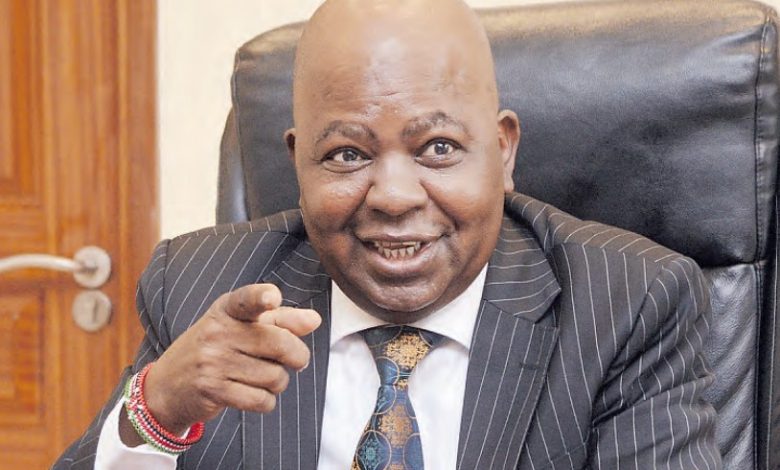
The legal battle over Kenya Railways Managing Director Philip Mainga’s continued stay in office is threatening to cast a shadow over a Sh25 billion compensation programme for landowners affected by the planned Naivasha-Kisumu-Malaba Standard Gauge Railway (SGR) extension.
At stake is not just the leadership of a state corporation, but the credibility of decisions involving billions of shillings in public funds, the rights of landowners awaiting compensation and the progress of a railway project expected to transform transport and trade across western Kenya.
A fresh court petition challenging Mainga’s authority to remain in office has introduced a governance complication at a sensitive stage of the project, with questions emerging over whether Kenya Railways should proceed with major decisions while the legal dispute remains unresolved.
The petition does not establish that Mainga has acted unlawfully or that the compensation programme is compromised. But it raises questions that Kenya Railways and its board may need to address before the payout process gathers momentum.
The Sh25 billion question: Who will oversee the money?
The government’s announcement that it has set aside Sh25 billion for land compensation has brought the next phase of the SGR project into sharper focus. The money is intended for landowners affected by the railway extension, particularly along the Narok-Bomet-Kisumu section, as valuation and negotiations continue.
The National Land Commission (NLC) is conducting public participation ahead of compensation negotiations, while Kenya Railways has secured early access to some sections of land to facilitate construction.
That arrangement makes the credibility of the compensation process critical. Landowners need confidence that valuations are fair, payments reach the rightful beneficiaries and land acquisition decisions are properly documented.
A leadership dispute at the corporation could complicate that process if it creates uncertainty over who is authorised to approve decisions, sign documents or commit the institution to obligations involving public money.
There is, however, no established evidence that Mainga has interfered with the compensation exercise or that the Sh25 billion has been misappropriated. The immediate concern is whether the legal questions surrounding his tenure could expose important project decisions to avoidable challenges.
A fresh petition reopens the leadership crisis
The controversy intensified in August 2026 when the Centre for Litigation Trust filed a fresh petition challenging Mainga’s continued exercise of the powers of managing director and chief executive.
The petitioner argues that Mainga’s second three-year term expired on February 2, 2026, and wants the High Court to restrain him from making further substantive decisions until the legality of his continued stay in office is determined.
It has also sought orders compelling the Kenya Railways Board to stop recognising or authorising him to exercise the chief executive’s powers, subject to any directions issued by the court.
The fresh case followed an earlier legal challenge filed by Joan Machuma Nyongesa. On August 11, the Employment and Labour Relations Court in Kisumu issued interim orders barring Mainga from exercising the functions of the office pending further proceedings.
The petitioner subsequently filed a notice withdrawing that case, a move reported by The Star and Citizen Digital on August 12. The withdrawal came before the planned inter partes hearing, and the reports did not establish why the petitioner abandoned the proceedings.
The new petition has therefore reopened a question that had briefly appeared to be receding: what is the legal basis for Mainga’s continued tenure?
The allegations remain subject to judicial determination. Filing a petition does not, by itself, establish that an appointment or continued tenure is unlawful.
The law at the centre of the dispute
The Centre for Litigation Trust has invoked the Government Owned Enterprises Act, 2025, arguing that the law introduced a statutory framework relevant to the appointment and tenure of chief executives in state corporations.
It wants Kenya Railways to produce the documents supporting Mainga’s continued occupation of the office, including appointment and renewal letters, board resolutions and legal opinions relied upon to justify his tenure.
Those records could help establish whether the corporation followed the applicable appointment procedures and what authority, if any, supports his continued exercise of executive powers.
The dispute is particularly sensitive because the corporation is overseeing a major infrastructure programme while preparations for land acquisition and compensation are under way.
The critical issue is not simply whether Mainga remains in office, but whether the board can demonstrate that the institution’s leadership arrangements comply with the law.
Could the dispute delay compensation?
The risk to the Sh25 billion programme lies in the possibility that uncertainty over executive authority could spill into administrative and financial decisions.
Compensation involves multiple stages, including identifying affected properties, determining ownership, conducting valuations, negotiating settlements and processing payments. Each stage requires reliable records and clearly established responsibilities.
If decisions are challenged on the grounds that the officials who made them lacked the necessary authority, the resulting litigation could create additional costs and delays. The extent of any disruption would depend on the nature of the decisions, the applicable law and any orders issued by the court.
The same uncertainty could affect negotiations with affected communities, particularly where landowners are being asked to cooperate with access arrangements before compensation is concluded.
For residents whose land is required for the railway, the priority is straightforward: transparent valuations, timely payments and a process that does not leave them caught between competing interpretations of the law.
The government and Kenya Railways have not been shown to have abandoned the compensation programme because of the petition. Nor is there evidence that a court has invalidated the planned payout.
But the leadership dispute creates a governance question that cannot be dismissed merely because construction has begun.
A Sh700 billion railway project under scrutiny
The stakes extend beyond the compensation budget.
The Naivasha-Kisumu-Malaba railway extension is part of a much larger infrastructure undertaking. The government has announced a Sh700 billion construction contract involving Chinese firms China Communications Construction Company and China Road and Bridge Corporation. The project is intended to strengthen links between the Port of Mombasa, western Kenya and Uganda.
The government expects the railway to improve the movement of cargo and support trade in agricultural products, including tea, coffee and sugar. The proposed corridor also has implications for logistics, employment and regional commerce.
Construction began in March 2026, with the government presenting the extension as a major step in expanding the country’s rail network.
Yet the scale of the investment makes institutional accountability especially important. Questions over the authority of the corporation’s chief executive could become more consequential if they intersect with contracts, procurement, land acquisition or compensation decisions.
The petitioner’s concern is that substantive decisions taken under a disputed mandate could later face legal challenges. Whether that concern has merit in relation to any particular decision will depend on the evidence and the court’s interpretation of the law.
The board faces a difficult governance test
According to information cited in the original report by The Informer Media Group, a section of the Kenya Railways Board wants a substantive managing director in place before the compensation process begins.
That reported position reflects the broader institutional dilemma: should the corporation proceed with major decisions while the chief executive’s tenure is being challenged, or seek clarity on his mandate before committing itself to further obligations?
A definitive answer must come from the applicable legal framework, the corporation’s governing documents and, where necessary, the courts.
The board’s responsibility is to ensure continuity of operations while protecting the corporation from avoidable legal and financial exposure. That includes clarifying who has authority to make decisions, ensuring compensation procedures are properly documented and maintaining effective oversight of public resources.
Any leadership transition or interim arrangement would also need to comply with the law rather than create a fresh governance dispute.
Landowners should not pay the price
For families whose property lies along the railway corridor, the dispute is not an abstract contest over corporate leadership.
Compensation can determine when people relocate, how they replace homes or businesses and whether they can plan for their financial future. Delays or uncertainty can impose real costs on households already affected by compulsory land acquisition.
The government’s commitment to the Sh25 billion payout therefore needs to be matched by transparent procedures and clear accountability.
The NLC’s role in public participation and valuation, together with proper documentation of ownership and payment decisions, will be central to maintaining public confidence.
Kenya Railways must also communicate clearly with affected communities about the status of negotiations, the applicable compensation procedures and any changes that could affect timelines.
The questions Mainga and Kenya Railways must answer
The emerging dispute raises several questions for the corporation and its leadership:
What appointment or renewal documents authorise Mainga to continue serving after February 2, 2026?
What legal advice and board resolutions underpin the corporation’s position on his tenure?
What safeguards will ensure that compensation decisions are made by duly authorised officials?
How will Kenya Railways protect landowners from unnecessary delays if the legal challenge continues?
What independent controls will ensure that the Sh25 billion is paid to the rightful beneficiaries on the basis of properly documented valuations and settlements?
These questions are matters of public accountability, not proof of wrongdoing. Kenya Railways and Mainga should have an opportunity to respond to the allegations and explain the legal basis for the current leadership arrangement.
Philip Mainga’s tenure dispute threatens to become a distraction from one of Kenya’s largest ongoing infrastructure projects at precisely the moment when landowners are preparing for a multibillion-shilling compensation exercise.
The danger is not that the Sh25 billion payout has already been sabotaged. No such conclusion has been established. It is that unresolved questions over executive authority could create uncertainty around decisions that require public confidence, legal certainty and careful financial oversight.
With construction advancing and compensation preparations under way, Kenya Railways needs to demonstrate that its leadership arrangements are lawful, its decisions are properly authorised and the interests of affected landowners remain protected.
The Sh25 billion question is ultimately bigger than Mainga: can Kenya Railways resolve its governance dispute without allowing uncertainty at the top to undermine confidence in the compensation process below?
There's no story that cannot be told. We cover the stories that others don't want to be told, we bring you all the news you need. If you have tips, exposes or any story you need to be told bluntly and all queries write to us [email protected] also find us on Telegram
