
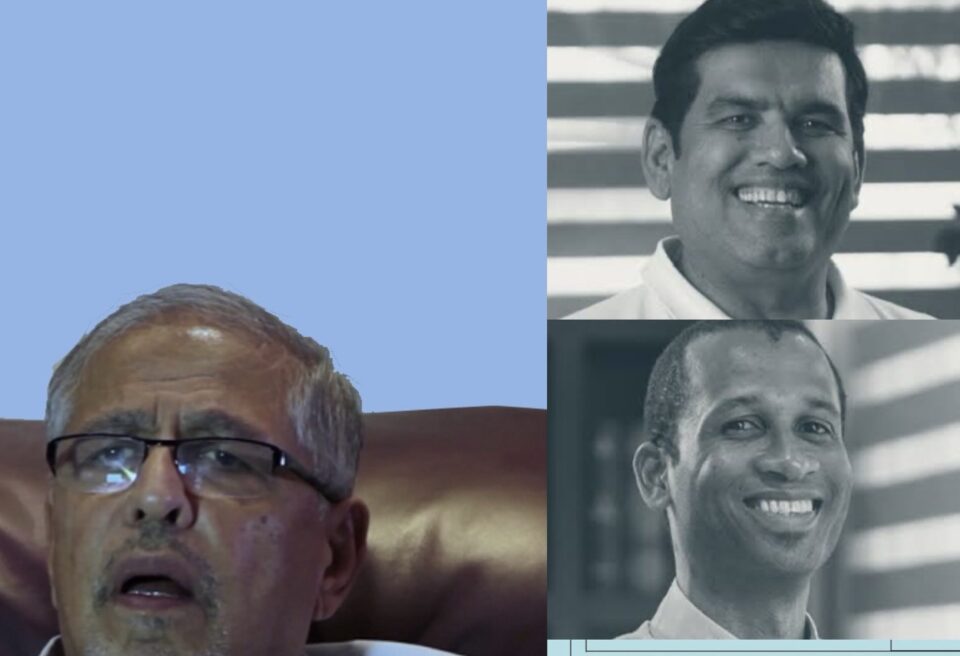
For decades, the name Mohamed Jaffer has loomed over Kenya’s port, fuel and grain sectors like an untouchable empire. To the public, he has been the face, the dealmaker, the elder statesman of coastal commerce. But as the fuel contamination scandal tied to the ill-fated MT Paloma shipment rips through the country, a different reality is emerging. The empire has not been run by the aging patriarch for years. It has been in the hands of his sons, men whose names rarely made headlines but whose fingerprints are now all over one of the most explosive corporate scandals Kenya has seen in recent memory.
With the elder Jaffer reportedly ailing and frequently abroad for treatment, operational control quietly shifted to his sons Mujtaba, Ali Abbas and Mohamed Husein. They sat on boards, signed off on transactions and managed a sprawling web of companies stretching from petroleum imports to cooking gas distribution and offshore financial structures. For years, they operated in the shadows of their father’s reputation. Now, the spotlight is fixed squarely on them.
At the center of the storm is One Petroleum Limited, the firm linked to the importation of tens of thousands of tonnes of substandard fuel into Kenya. The shipment, approved under controversial emergency provisions, entered the country at inflated prices and with chemical compositions that experts say posed serious risks to engines and public health. By the time authorities reacted, the cargo had already been discharged and integrated into the national fuel system, making withdrawal practically impossible.
Corporate records place the Jaffer sons at the heart of this operation. They were not passive shareholders. They were directors with decision-making authority at the exact moment the controversial import deal was executed. When investigators began summoning individuals for questioning, it was the sons who appeared. Their father was notably absent.
This is not the first time Mujtaba Jaffer, the most publicly exposed of the trio, has been linked to controversy. His name surfaced in past international investigations into procurement deals that allegedly inflated costs for ordinary Kenyans while generating private profit for insiders. That pattern, critics now argue, appears to have repeated itself in the fuel saga. The pricing structure for the MT Paloma consignment deviated sharply from standard government-to-government benchmarks, effectively transferring billions in additional cost to consumers at the pump.
Ali Abbas and Mohamed Husein have maintained lower public profiles, but investigators say their roles within the family’s corporate network are no less significant. Both have held directorships across multiple energy and logistics firms tied to the Jaffer business ecosystem. This interconnected structure has long made it difficult for regulators to isolate responsibility, as ownership and control are spread across overlapping entities and, in some cases, offshore holdings.
Behind the boardroom decisions lies a business model that insiders describe as aggressive and deeply entrenched. The Jaffer empire has historically relied on strategic access to state institutions, regulatory loopholes and dominance of key infrastructure to maintain its position. From grain handling at the Port of Mombasa to liquefied petroleum gas imports that supply a vast share of Kenyan households, the family’s reach has been both wide and resilient.
Critics argue that this dominance has not been built purely on competitive advantage but on a system that edges out rivals and leverages influence. Over the years, competitors who attempted to enter sectors controlled by the Jaffer network have reported regulatory hurdles, delayed approvals and sudden policy shifts that tilted the playing field. Legal battles have followed, some still unresolved, reinforcing a perception of a business empire adept at navigating Kenya’s complex legal and political terrain.
The fuel scandal has amplified those concerns. Investigators are now examining whether the emergency conditions used to justify the importation of the contaminated cargo were manipulated to create an artificial crisis. If proven, it would suggest a coordinated effort involving both private actors and state officials to bypass standard procurement safeguards.
What has particularly angered the public is the apparent disconnect between accountability and consequence. Several government officials linked to the approval process have already lost their positions. The companies involved continue to operate. The sons who oversaw the transactions remain free as investigations proceed.
There is also the question of financial flows. Analysts point to the use of offshore entities linked to the family’s businesses as a potential mechanism for shifting profits خارج Kenya’s tax net. Such structures are not illegal in themselves, but in the context of inflated emergency deals and opaque ownership, they raise fresh questions about whether the country is losing revenue at a time when ordinary citizens are bearing the cost of high fuel prices.
Within Mombasa’s business circles, the narrative has shifted rapidly. The once unassailable Jaffer name is now being dissected in ways that were unthinkable just months ago. Competitors who previously spoke in hushed tones are now openly questioning how a single family came to wield such influence across multiple sectors for so long.
Yet even as scrutiny intensifies, the structure of the empire remains intact. The companies continue to trade. The networks remain in place. And the sons, now thrust into the public eye, are navigating the most serious test of their control over the family fortune.
What happens next will likely define not only the future of the Jaffer empire but also the credibility of Kenya’s regulatory and judicial systems. If the investigations stall or collapse, it will reinforce long-held suspicions that powerful business dynasties operate beyond the reach of accountability. If they proceed to their conclusion, it could mark a rare moment where influence and wealth fail to shield those at the center of a national scandal.
For now, one thing is clear. The era of Mohamed Jaffer as the sole face of the empire is over. The curtain has been pulled back, and the men who have long operated behind it are finally visible.
There's no story that cannot be told. We cover the stories that others don't want to be told, we bring you all the news you need. If you have tips, exposes or any story you need to be told bluntly and all queries write to us [email protected] also find us on Telegram
