
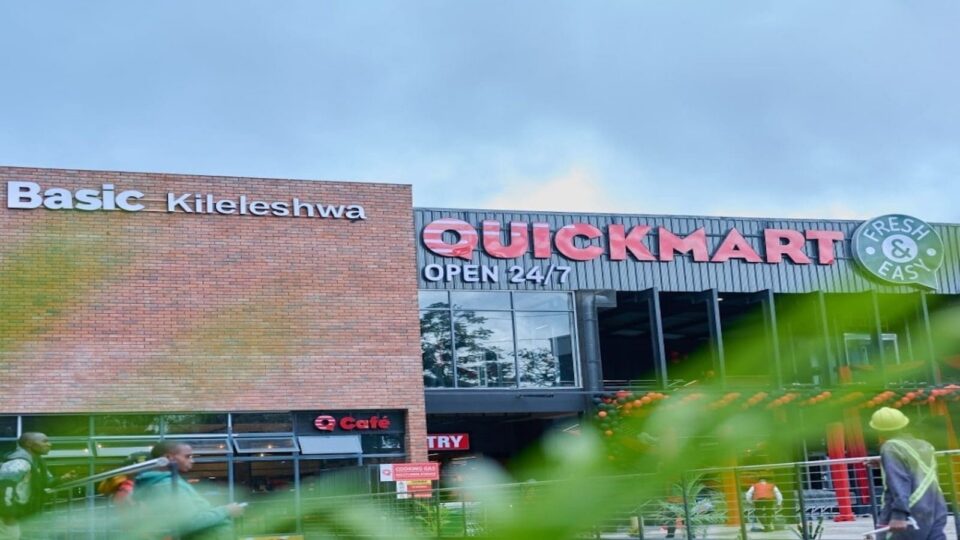
The supermarket chain’s blockbuster listing raises tough questions over who really benefits from the Sh30 billion valuation, billions in shareholder payouts, supplier financing and the limited fresh capital available to fund expansion.
Quickmart’s much-hyped Sh15 billion initial public offering (IPO) is facing an uncomfortable question: are investors buying into the supermarket chain’s next phase of growth, or financing an exit for the shareholders who built it?
Beneath the promise of a nationwide retail expansion, 125 stores and a potential billion-dollar revenue milestone lies a critical detail in the offer documents: the IPO is a secondary share sale, meaning the proceeds go to existing shareholders rather than into Quickmart’s coffers.
At Sh7.50 per share, the offer values the retailer at approximately Sh30 billion. Yet Quickmart itself will not receive the Sh15 billion being raised from the public if the offer is fully subscribed.
That distinction matters. Investors are being asked to pay for a stake in a business whose expansion ambitions, cash generation and ability to withstand pressure from suppliers must be weighed against the substantial sums its existing owners have already extracted.
The offer is not necessarily a bad investment simply because it allows shareholders to sell. But the structure shifts the spotlight from the retailer’s growth promises to the valuation, the sellers’ motivations and the financial resilience of the business that new investors are being invited to own.
Private equity and founders prepare to cash out
At the centre of the transaction is Sokoni Retail Kenya Limited, the holding vehicle through which the existing shareholders own Quickmart.
According to the figures presented in the offer materials, the sale could generate approximately Sh7.6 billion for private equity investor Adenia Partners, Sh4.8 billion for the Kinuthia family and Sh1.8 billion for Tumaini’s founders, depending on full subscription and the final allocation of shares.
Chief Executive Peter Kang’iri is also among those positioned to benefit from the transaction.
For Adenia, the listing offers a route to realise gains from an investment dating back several years. Its Fund IV closed in 2017, placing the investment within the period when private equity managers typically face pressure to return capital to investors.
Adenia partner Martha Osier has maintained that the firm remains committed to Quickmart and intends to retain its position as the largest shareholder, alongside board control.
That assurance does not change the economics of the offer. A shareholder can remain invested while selling a substantial portion of its stake, crystallising gains without abandoning the business altogether.
The concern for incoming investors is whether the price adequately reflects Quickmart’s underlying financial position and whether the retailer will have sufficient resources to deliver the growth used to justify its valuation.
A Sh30 billion valuation built on future promises
Quickmart’s proposed valuation puts a substantial premium on its reported book equity.
Based on the supplied financial figures, shareholders’ equity stood at approximately Sh1.06 billion at the end of 2025. A Sh30 billion valuation would therefore represent roughly 28 times that amount.
The valuation also appears demanding when measured against reported earnings. The offer’s investment case reportedly places greater emphasis on adjusted earnings and projected 2026 performance, producing a more attractive multiple than one calculated using historical reported profits.
Such adjustments are common in IPOs, particularly where companies are preparing for a different ownership structure. However, investors need to understand precisely which expenses have been excluded, why they are considered exceptional and whether similar costs could recur.
Quickmart operates in a fiercely competitive sector where supermarket margins are typically thin. Sustaining a premium valuation therefore depends on continued revenue growth, efficient store operations, favourable supplier terms and disciplined capital allocation.
The question is whether the projected expansion can deliver those returns while the company maintains substantial dividend payouts and finances new stores in a business model heavily dependent on supplier credit.
A growth forecast is not the same as growth already delivered. Investors paying for future performance carry the risk that sales growth, margins or cash generation may fall short of expectations.
There's no story that cannot be told. We cover the stories that others don't want to be told, we bring you all the news you need. If you have tips, exposes or any story you need to be told bluntly and all queries write to us [email protected] also find us on Telegram
