
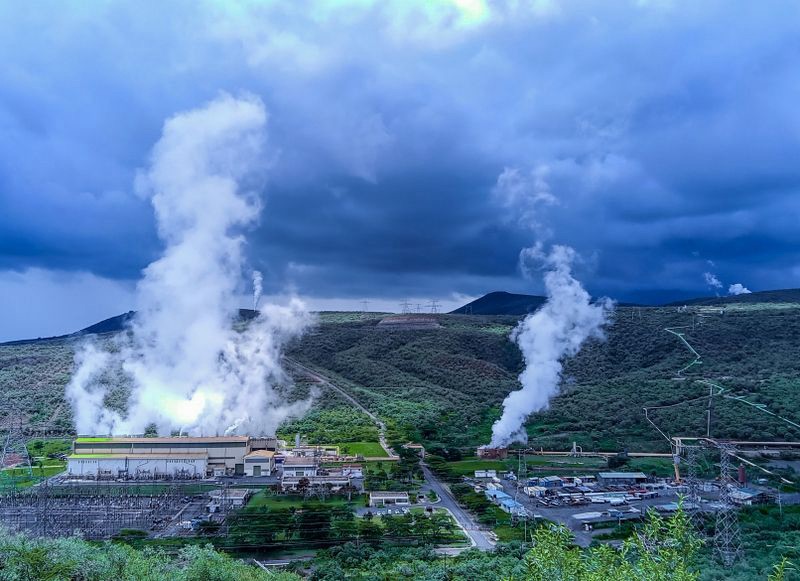
Kenya’s multibillion-shilling geothermal investment at Olkaria is facing fresh scrutiny over how Chinese energy group Kaishan secured access to a strategic public resource without an openly competitive procurement process.
At the centre of the controversy is a February 2025 approval by the National Treasury that reportedly allowed the approximately $550 million electricity and green fertiliser project to proceed under a special procurement arrangement, raising questions about transparency, value for money and the safeguards governing public assets.
The deal has drawn attention to the terms under which the state-owned Kenya Electricity Generating Company (KenGen) will supply geothermal steam from existing wells to a private investor for a project expected to operate over several decades.
An investigation published by Kenya Insights on October 28, 2026, says the exceptional procurement route enabled Kaishan to secure a position in a major energy and fertiliser project without the ordinary competitive process that would allow alternative investors to demonstrate whether they could offer the country better terms.
The allegations raise serious accountability questions, but the use of a special procurement procedure does not, on its own, establish fraud or corruption. The central issue is whether the legal conditions for bypassing open competition were satisfied and whether the public obtained the best possible commercial deal.
A 30-year commitment involving public geothermal resources
The scale of the arrangement makes the procurement questions particularly significant.
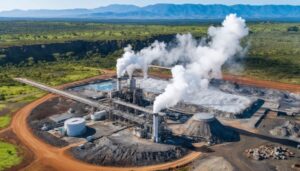
Under the agreement, KenGen will provide geothermal steam from existing wells to Kaishan Terra Green Ammonia Limited, a wholly owned subsidiary of Kaishan Group. The steam is expected to support a 165.4-megawatt geothermal power facility whose electricity will be used to manufacture green hydrogen, ammonia and fertiliser.
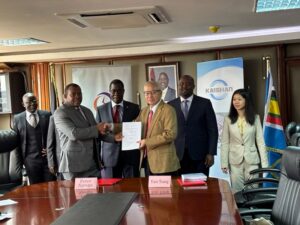
KenGen and Kaishan signed the steam-supply agreement in October 2025, with the project officially launched in November that year in a ceremony attended by President William Ruto. The arrangement gives the Chinese investor access to geothermal steam for 30 years.
KenGen has publicly promoted the investment as a major industrialisation opportunity, projecting annual net profits of approximately $13 million from the steam-supply arrangement. The project is also expected to reduce Kenya’s dependence on imported fertiliser, create jobs and support agricultural production.
However, the projected benefits do not remove the need to establish whether the state secured favourable terms before committing its geothermal resources to a single investor for decades.
The distinction is important: the reported $550 million figure relates to the investment cited in the procurement investigation, while other public project descriptions put the overall investment as high as $800 million. These figures should not be treated as the value of a conventional government contract awarded directly to Kaishan.
Treasury approval raises the central procurement question
The reported February 2025 Treasury approval is the key document in the controversy.
Kenya’s Public Procurement and Asset Disposal Act provides for a specially permitted procurement procedure under Section 114A. However, the procedure is not a blanket exemption from procurement law. Its use must satisfy statutory conditions and be supported by the required justification.
In a landmark judgment involving the Kenya Ports Authority, the Supreme Court ruled in 2025 that specially permitted procurement must remain consistent with constitutional requirements for transparency, accountability and fair, competitive and cost-effective public contracting. The court found that the contested Portside grain-terminal arrangement breached constitutional procurement principles.
That ruling raises a significant question for the Olkaria project: what exceptional circumstances justified the decision to proceed without an open competition, and how was the decision shown to be in the public interest?
The investigation by Kenya Insights says a detailed public justification for the special procurement route has not been released. If that remains the case, Parliament and the relevant oversight agencies have grounds to demand disclosure of the Treasury’s approval, the supporting legal advice and the commercial assessments underpinning the arrangement.
From geothermal contractor to strategic investor
Kaishan’s growing presence in Kenya also provides important context.
The Chinese group first established a foothold in the country’s geothermal sector through engineering work on the 35-megawatt Sosian Menengai plant. It subsequently acquired OrPower 22 Limited, which held a Menengai geothermal licence, and developed the facility that entered commercial operation in March 2026, according to the Kenya Insights investigation.
Its expansion into Olkaria represents a different scale of involvement. Rather than supplying equipment or constructing a power plant for another owner, Kaishan is developing an integrated energy and fertiliser operation that depends on steam supplied by a state-owned utility.
The structure may offer commercial and technological advantages. But it also makes transparency over pricing, risk allocation and contractual obligations essential.
The public needs to know how KenGen determined the price of the steam, whether the agreement contains minimum-payment or take-or-pay provisions, who bears the risk if the facility underperforms, and what protections apply if the investor fails to meet its obligations.
These are material questions because geothermal steam is a strategic resource, and a long-term agreement can constrain the state’s commercial options long after the initial investment decision has been made.
Government fertiliser purchases add another layer of scrutiny
The proposed fertiliser market is another critical part of the arrangement.
The project is intended to produce green ammonia and fertiliser for agricultural use, with public reporting indicating that the government is expected to purchase the output for distribution to Kenyan farmers. Industry reporting puts the first phase’s ammonia production target at approximately 100,000 tonnes annually, with further expansion planned.
Such an arrangement could help reduce import dependence and cushion farmers against international price fluctuations. Yet any government purchasing commitment or payment support would need clearly defined terms.
Oversight agencies should establish whether the state has guaranteed purchases, minimum volumes or payments, and whether any contingent liabilities could arise if the fertiliser is more expensive than competing imports or demand falls below projected production.
A domestic production strategy should not automatically become a public financial obligation on terms that have never been independently tested against the market.
Parliament and auditors face a test of accountability
The controversy now presents an opportunity for Parliament, the Auditor-General and the Public Procurement Regulatory Authority to establish whether the procurement process met the legal standard.
The investigation calls for disclosure of the full Treasury justification, the steam-supply agreement’s pricing and liability provisions, the terms of any government fertiliser offtake arrangement and an independent assessment of value for money.
KenGen should also explain how the agreement was evaluated, what alternatives were considered and how the interests of the state-owned utility were protected over the 30-year period.
The questions are particularly important given that Kenya has previously experienced contested procurement processes involving geothermal projects. In a separate dispute over consultancy services for the Olkaria VII project, the High Court upheld KenGen’s termination of a tender after a financier declined to provide a mandatory approval. That case concerned a different procurement and should not be confused with the Kaishan agreement, but it illustrates the legal and financial scrutiny surrounding major geothermal investments.
The central issue is not whether Chinese investment should be welcomed. It is whether Kenya secured the best possible deal for a public resource.
Kaishan’s investment could deliver meaningful benefits to energy production, manufacturing and agriculture. But the scale of those promises makes independent scrutiny more, not less, necessary.
Until the legal justification for the special procurement route and the material commercial terms are made available for examination, questions over transparency, competition and value for money will remain.
The available reporting does not establish that KenGen officials committed fraud, and the procurement arrangement should not be described as fraudulent as a proven fact without further evidence. What it does establish is a serious public-interest question over how a major private investment gained long-term access to Kenya’s geothermal resources and whether the process met the standards required by law.
There's no story that cannot be told. We cover the stories that others don't want to be told, we bring you all the news you need. If you have tips, exposes or any story you need to be told bluntly and all queries write to us [email protected] also find us on Telegram
