
In the quiet corridors of Safaricom’s social impact machinery, where billions of shillings are meant to build classrooms, equip hospitals and dig boreholes for Kenya’s poorest communities, a single name has become the lightning rod for explosive questions that the telecom giant has so far refused to confront in public.
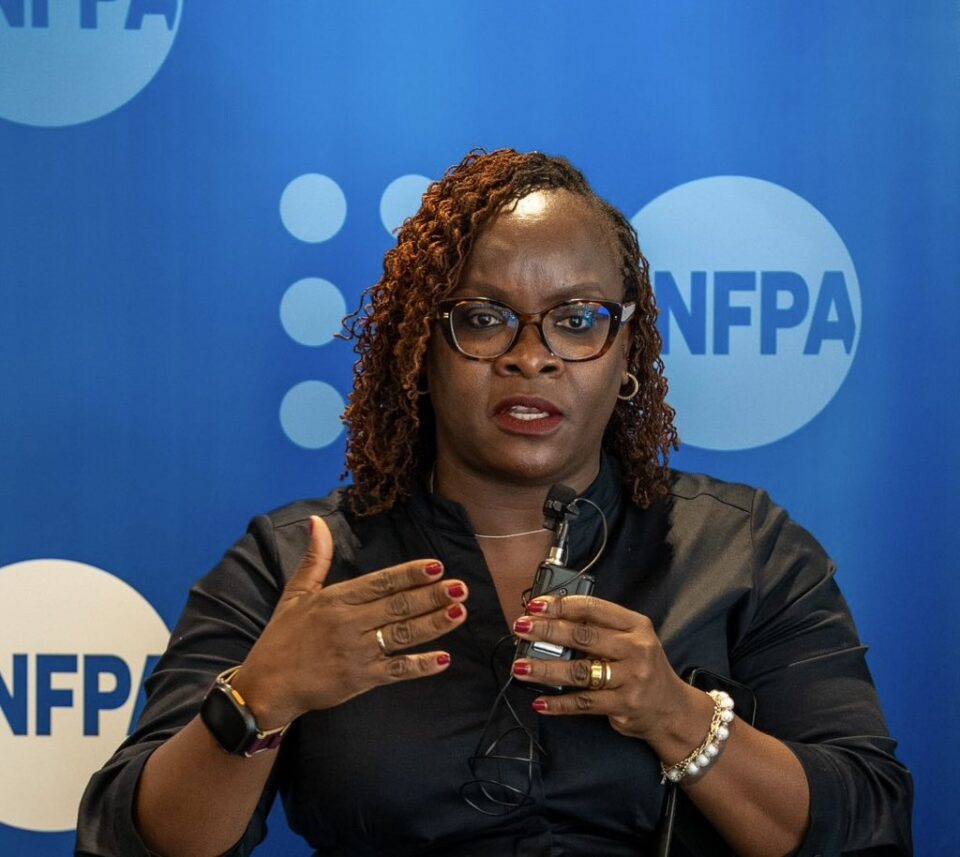
Karen Basiye, Director of Sustainable Business and Social Impact, sits at the centre of allegations that the Safaricom Foundation has been turned into a vehicle for political patronage and opaque procurement, with projects allegedly steered toward politicians aligned with the national government while ordinary communities without powerful intermediaries are left waiting.
Investigative blogger Cyprian Nyakundi has escalated the pressure in recent days, demanding to know why serious corruption allegations against the foundation’s senior leadership have not triggered a publicly disclosed independent investigation. He has asked pointedly why foundation projects appear to flow only to pro-government politicians, and what exactly is happening inside the structures that Basiye oversees. The questions land with particular force because Basiye is not a distant administrator. Safaricom Foundation and M-PESA Foundation identify her as the executive responsible for sustainable business and social impact, and academic profiles describe her as leading the work that decides which projects receive funding.
Under the foundation’s 2023-2026 strategy, resources have been channelled into education, health and economic empowerment.
The scale is substantial. Since 2019 the Ndoto Zetu programme alone has directed hundreds of millions of shillings into more than a thousand community projects. Yet the public still has no clear, comprehensive database showing how needs were assessed, who proposed projects, which contractors were selected, or whether competitive processes were followed.
Specific examples have given the political favouritism claims concrete form. In Vihiga County, Senator Godfrey Osotsi has been cited as acknowledging that he lobbied for a KSh40 million facility at Emusenjeli Primary School. In Machakos, former State House Chief of Staff and current gubernatorial aspirant Nzioka Waita has described how an initial request for KSh2.5 million grew into support worth KSh50 million, which he linked to previous service.
Waita’s history with the company is not incidental.
He was a founding trustee of the Safaricom Foundation and spent years in senior roles at Safaricom before moving into government. In Tongaren, National Assembly Speaker Moses Wetang’ula appeared alongside Basiye at the launch of a KSh35 million school project for Naitiri Primary School and Naitiri RC Primary School in 2023.
These are not secret events.
They were publicised. Critics argue that the optics allow politicians to claim credit for corporate philanthropy while raising the possibility that political access, rather than pure need, influences which communities receive large, visible investments.
Whistleblower accounts and online reports have gone further, alleging that some projects exist only in documentation, that procurement controls have been bypassed, and that payments have been structured in ways that make the movement of money difficult to trace.
Claims have circulated that funds intended for vulnerable beneficiaries may have moved through private investment vehicles or foreign currency accounts, and that entities with connections to foundation officials have received contracts. No court has established these claims, and no forensic audit has been published.
That absence is precisely the problem.
The foundation has invested heavily over the years, with Safaricom and M-PESA Foundations reporting billions of shillings directed into education, health and other programmes that have reached millions of people. Large figures and positive outcomes in selected counties do not answer questions about process.
Projects have been documented in places associated with opposition politics, including a substantial allocation in Homa Bay under the Citizens of the Future programme.
Such examples make it impossible to claim that every shilling has been reserved exclusively for government allies.
They do not, however, eliminate the need to publish the full selection criteria, the identity of proposers, conflict-of-interest declarations, and verification that work was completed as reported.
The scrutiny has not stopped at the foundation. Nyakundi has extended it to CEO Peter Ndegwa, alleging that Ndegwa’s wife has handled Safaricom branding work from London after being handpicked, and to board chairman Adil Khawaja, pressing for the release of board minutes and records related to the June 2024 internet disruption during anti-Finance Bill protests.

That outage, which Safaricom attributed to undersea cable issues while independent monitors found no supporting evidence of physical damage, continues to fuel accusations that the company is willing to interrupt critical national infrastructure under political pressure.
With the 2027 elections approaching, the combination of opaque charitable spending and questions about network integrity has intensified calls for independent oversight that the board cannot simply approve for itself.
Safaricom has long presented itself as a company with a zero-tolerance stance on corruption and a commitment to transforming lives. Basiye herself has received significant recognition, including the Schwab Foundation Corporate Social Innovator of the Year award in 2026 and listing among national honours. Those accolades reflect real programmes that have improved maternal health units, supported scholarships and expanded digital inclusion.
They do not substitute for the records that would allow the public to see whether project selection was driven by poverty indicators, classroom overcrowding and health gaps, or by lobbying and prior relationships. Until the foundation publishes a complete project database with budgets, contractors, beneficial owners, inspection evidence and any political representations received, the allegations of procurement cartels and political favouritism will continue to define the conversation.
Silence, in this case, is not neutral. It leaves Kenyans who contribute to the company’s success through their daily transactions wondering who truly benefits when the foundation writes a cheque for a classroom or a borehole.
The documents exist. The question is whether Safaricom and its trustees are prepared to release them.
There's no story that cannot be told. We cover the stories that others don't want to be told, we bring you all the news you need. If you have tips, exposes or any story you need to be told bluntly and all queries write to us [email protected] also find us on Telegram
