

A child dies on a Nairobi road. A political aide is shot after an election. A university student is killed. A Cabinet minister is found dead. A Kenya Wildlife Service officer is gunned down on a prominent ranch.
Then, in case after case, the criminal justice system stalls, withdraws, acquits or simply fails to produce a murder conviction.
That is the uncomfortable thread running through some of Kenya’s most controversial death cases involving powerful or well-known figures.
It is not legally correct to call all of them killers. Some were acquitted after trials, others were discharged because prosecutors could not sustain the charges, while some prosecutions were stopped before trial. But the recurring question remains: why do so many spectacular death cases involving influential Kenyans end with no murder conviction?
Sylvia Mulinge: The child who became a corporate footnote
Before becoming MTN Uganda chief executive, Sylvia Wairimu Mulinge was a senior Safaricom executive when a Toyota Prado assigned to her was involved in a fatal crash on Nairobi’s Southern Bypass on February 1, 2015.
Eight-year-old Mary Kusa Etale died.
Court records show that police initially investigated the accident and Mulinge said she was cleared. Two years later, however, the ODPP directed that she be charged with causing death by dangerous driving. A charge sheet was prepared.
Mulinge went to the High Court.
In 2018, Justice George Odunga prohibited the prosecution after finding serious problems with how the decision to prosecute had been handled. She was never convicted over the child’s death.
There were allegations that she bribed the prosecution with Sh800,000 to escape the murder charge.
Today, the executive is running one of Uganda’s biggest telecommunications companies.
Mary Etale never got to grow up.
Aisha Jumwa: From murder suspect to State witness
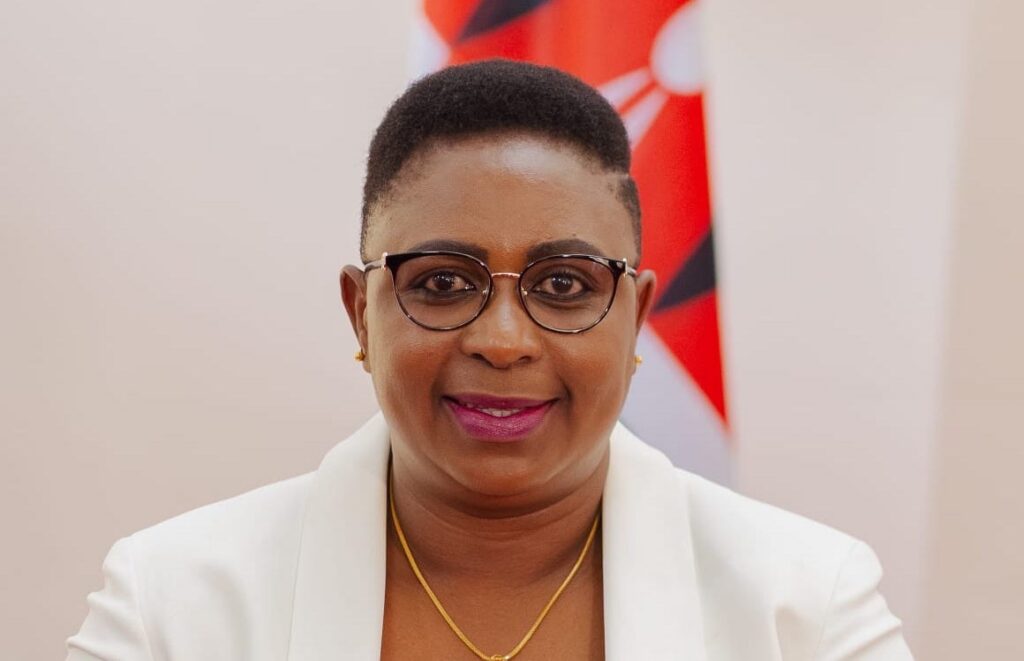
Few cases better demonstrate the strange turns a politically explosive prosecution can take than that of Aisha Jumwa.
Jola Ngumbao was shot dead during political clashes in Kilifi in 2019. Jumwa and her then aide Geoffrey Okuto were charged with murder.
Then the State changed course.
The ODPP reviewed the evidence and concluded that the evidentiary threshold for sustaining the case against Jumwa, particularly under the doctrine of common intention, had not been met. The High Court discharged her in December 2022 and she was lined up as a prosecution witness against Okuto.
Ngumbao’s family reacted with anger and later withdrew from the proceedings, with relatives saying they had lost faith in the process.
The man who began the case as a co-accused was left carrying the murder prosecution alone.
Didmus Barasa: A murder trial that collapsed
Kimilili MP Didmus Barasa faced murder charges over the 2022 killing of Brian Olunga, an aide to his political rival.
The case went to trial.
But the prosecution could not connect Barasa to the killing beyond the criminal standard required by the court. In July 2023, Justice Rose Ougo acquitted him, finding the evidence insufficient, including the failure to link his firearm to the fatal shooting.
Olunga remained dead.
Barasa remained a free man.
That is not a declaration that Barasa killed Olunga. The court’s finding was that the prosecution failed to prove its case.
Tom Cholmondeley and the power of a nolle prosequi
Perhaps no case better captures Kenya’s long-running debate about class and justice than the 2005 shooting of KWS ranger Samson ole Sisina at Soysambu Ranch.
Tom Cholmondeley, a member of the prominent Delamere family, was charged with murder.
But before the case could proceed to a full trial, the State terminated it through a nolle prosequi, effectively ending the prosecution. Then DPP Philip Murgor told the court the available evidence could not support a murder case.
The decision caused public outrage.
Cholmondeley’s later killing of Robert Njoya is a separate case. He was eventually acquitted of murder but convicted of manslaughter and imprisoned.
That distinction matters.
But so does the fact that Sisina’s family never got a murder trial against the man who had been charged with killing their relative.
Pastor Ng’ang’a and the missing driver
Pastor James Ng’ang’a was charged after the 2015 road crash that killed Mercy Njeri.
The prosecution alleged that he was driving the Range Rover involved in the collision.
The trial court acquitted him after finding that the prosecution had failed to establish that he was behind the wheel. The ODPP appealed, arguing that the ruling was erroneous, and the High Court later ordered the matter reconsidered.
Again, the central problem was not that a death had not occurred.
It was proving who was criminally responsible.
Robert Ouko, Moses Mpoe and the unresolved graveyard
The pattern becomes even more disturbing when the names involved are placed against Kenya’s history.
Former Foreign Affairs Minister Robert Ouko was murdered in 1990. Jonah Anguka, a former District Commissioner, became the only person prosecuted for the killing and was acquitted in 1994.
Decades later, Kenya still has no murder conviction for Ouko’s death.
Then there is land activist Moses Mpoe, whose 2010 killing led to a murder prosecution involving members of the Koinange family and others. The accused were acquitted after the prosecution failed to establish its case.
Different decades. Different suspects. Different evidence.
But the same haunting ending: a dead victim and no murder conviction.
The uncomfortable question
These cases do not prove that Kenya’s prominent citizens routinely commit murder and escape justice.
They prove something more difficult to dismiss.
Kenya’s justice system has repeatedly failed to convert serious allegations involving powerful people into final criminal accountability.
Sometimes the failure is forensic. Sometimes witnesses collapse. Sometimes investigations are inadequate. Sometimes prosecutors change their minds. Sometimes a court finds the evidence legally insufficient. And sometimes the State itself terminates the case.
The law demands proof beyond reasonable doubt. It should.
But justice also demands that investigations be competent, prosecutors be independent and victims’ families are not left wondering why the system that moved with extraordinary speed to arrest their loved ones’ alleged killers suddenly loses momentum when the accused is politically connected, wealthy or famous.
That is the real story behind Mulinge, Jumwa, Barasa, Cholmondeley and the others.
Not that courts wrongly acquitted them.
Not that every accused person was guilty.
But that, again and again, the Kenyan State has been unable to answer the most basic question left by a suspicious death: who, if anyone, should be held criminally responsible?
And when that answer disappears, it is usually the victim’s family that is left carrying the unanswered question.
There's no story that cannot be told. We cover the stories that others don't want to be told, we bring you all the news you need. If you have tips, exposes or any story you need to be told bluntly and all queries write to us [email protected] also find us on Telegram
