
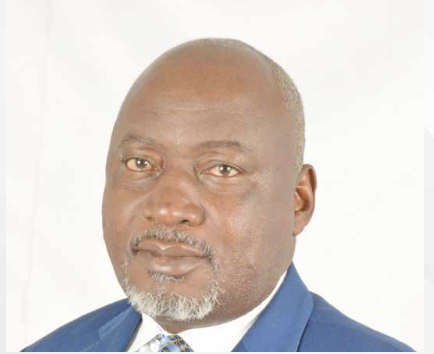
NAIROBI – Environment and Land Court Judge Anthony Ombwayo has escaped a potentially career-ending removal process after the Employment and Labour Relations Court permanently stopped the Judicial Service Commission from pursuing a complaint that arose from a highly contentious Nakuru land dispute involving businessman Joshua Kulei.
But Friday’s judgment did not establish that the allegations against Ombwayo were false.
Instead, a three-judge bench comprising Justices Jemimah Wanza Keli, Onesmus Makau and Jacob Gakeri found that the complaint relied upon by the JSC did not constitute a valid constitutional petition for removal under Article 168.
That distinction is critical.
The allegations that triggered the disciplinary process remain one of the most extraordinary episodes surrounding a sitting Environment and Land Court judge in recent years.
At the centre is LR No. 13287/99, a 20.24-hectare parcel in the Ngata/Njoro area of Nakuru, which became the subject of litigation involving Kulei, Sian Enterprises Limited, the Agricultural Development Corporation and rival claimants.
Ombwayo presided over the dispute.
The controversy exploded after Juma Okumu, who sought to be joined in the litigation, asked Ombwayo to recuse himself. Okumu alleged that the judge had inappropriate contacts with parties connected to the dispute and had been involved in improper financial dealings.
The allegations went far beyond the usual complaint by a disappointed litigant.
Court records show that Okumu alleged that Kulei had given the judge Sh30 million, with a further Sh20 million allegedly promised upon conclusion of the case. Those are allegations, not judicial findings of fact. Ombwayo denied receiving money from litigants.
In his July 10, 2025 ruling rejecting the recusal application, Ombwayo himself recorded the extraordinary allegation, stating that the accusation was that Kulei had given him Sh30 million, with Sh20 million allegedly remaining payable at the conclusion of the case.
The judge rejected the allegation.
He said there was “no scintilla of evidence” that the court had received money from the litigants and pointed out that the M-Pesa transactions cited by Okumu occurred on June 26, 2023, more than a year before Okumu filed his petition in September 2024.
Ombwayo also questioned the alleged connection between the M-Pesa transactions and the litigants.
But the paper trail did not end there.
Okumu’s complaint to the JSC alleged that on June 21, 2023, a phone number he attributed to Ombwayo was used to request Sh300,000 through an intermediary identified as Kariuki.
According to the affidavit reported at the time, Sh200,000 was subsequently sent to a number registered to Violet Mumia while another Sh100,000 went to a Safaricom till associated with Esther Omutanyi.
Okumu alleged that Mumia was a close relative of the judge and that the number registered in her name was being used by another relative of Ombwayo. The JSC acknowledged receipt of the complaint and assigned it JSC Petition No. 49 of 2025.
Again, these allegations have never been established by a criminal conviction or a finding that Ombwayo solicited or received a bribe.
What makes the affair particularly sensitive is what happened inside the underlying land case.
The Kulei ruling that intensified the storm
On August 5, 2025, only weeks after refusing to recuse himself, Ombwayo delivered judgment in Omar Mohamed Omar and Patrick Maina Wakanda v Joshua Kulei & Others.
The judgment went in favour of Kulei and Sian Enterprises.
Ombwayo declared Kulei’s side the lawful registered proprietor of LR No. 13287/99 and ordered the rival claimants to vacate the 20.24-hectare property. He also ordered cancellation of their titles.
The judgment was particularly significant because the dispute involved competing documents tracing back to the Agricultural Development Corporation.
Ombwayo found that the title relied upon by the rival claimants was not supported by the mother title. He said the relevant entry had been tampered with, with the name of Joseph Kasaine Nkaissery removed and another name inserted and subsequently deleted.
He further accepted evidence that Nkaissery had been the original allottee and that Kulei’s company had subsequently purchased the property from him.
The judge went as far as saying that the rival title had been obtained illegally and unprocedurally.
That decision provides the backdrop against which the allegations of financial dealings had to be viewed.
It does not, however, prove that the judgment was bought or influenced. There is no court finding establishing such a connection.
Indeed, Ombwayo’s July recusal ruling expressly held that the alleged payments had not been proved.
The Supreme Court precedent fight
There was another fault line.
Okumu argued that Ombwayo had refused to allow oral evidence and cross-examination in a case involving competing claims to public land despite the Supreme Court’s decision in Fanikiwa Limited & 3 Others v Sirikwa Squatters Group & 17 Others, which dealt with the importance of viva voce evidence in contested title disputes.
Ombwayo held that his decision could be challenged before the Court of Appeal but could not be used as a basis for his own recusal.
The dispute subsequently travelled to the Court of Appeal.
In January 2026, a three-judge Court of Appeal bench dismissed Okumu’s application for a stay of proceedings in the related litigation. The application had challenged proceedings arising from Ombwayo’s February 6, 2025 ruling.
That appellate decision, however, was a ruling on a stay application and did not constitute a finding that the allegations against Ombwayo were true or false.
A judge under repeated scrutiny
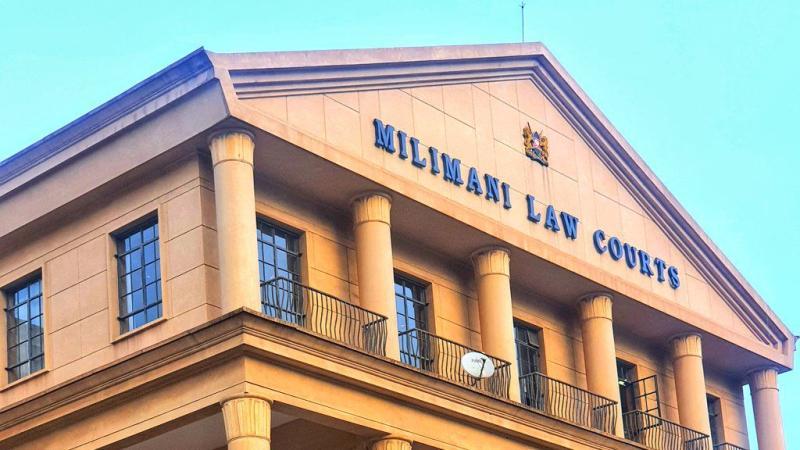
The Kulei controversy is not the only episode that has put Ombwayo’s judicial conduct under scrutiny.
In February 2024, he recused himself from the contentious Nakuru War Memorial Hospital dispute after expressing frustration over repeated failure by police to enforce court orders.
The case had already seen multiple orders directing authorities to facilitate access to the hospital. Ombwayo took over after another judge recused herself, issued fresh enforcement orders and subsequently stepped aside.
There are also appellate records involving judgments in which Ombwayo sat at the ELC.
In General & another v Hussein & 3 others, the Court of Appeal in June 2025 allowed an appeal from an ELC judgment in which Ombwayo was part of the coram and ordered cancellation of disputed titles, finding the acquisition illegal, unlawful and fraudulent. That is an appellate reversal of the lower-court outcome, although the decision was by a bench and should not be portrayed as a finding of personal wrongdoing by Ombwayo.
In another matter, Kiprono v Kiprono, the Court of Appeal in February 2026 dealt with an appeal from an ELC judgment involving Ombwayo and ultimately held that one party held five acres on trust for another.
More recently, The Standard reported that Ombwayo came under scrutiny over two similar rulings issued on November 27, 2025 and January 22, 2026 in a property dispute involving the estate of former Nakuru nominated MP Phillip Kamau. Ombwayo had by then left Nakuru following a transfer.
These episodes do not establish misconduct by themselves. They do, however, explain why Ombwayo’s record has attracted unusual scrutiny from litigants, lawyers and the appellate courts.
The JSC escape route
The most consequential development came when the JSC took up Okumu’s complaint.
According to the latest court record, the Commission treated the complaint as sufficiently serious to proceed to an oral hearing under Article 168 of the Constitution.
That could have placed Ombwayo on the path towards a tribunal appointed by the President.
Ombwayo challenged the process.
The Employment and Labour Relations Court has now found that the March 14, 2025 letter from Keaton & Keaton Advocates was addressed to the Chief Justice and sought administrative intervention, including the transfer of files, rather than formally petitioning the JSC for Ombwayo’s removal.
The bench therefore concluded that there was no valid Article 168 petition upon which the JSC could base the removal process.
It permanently restrained the Commission from proceeding with JSC Petition No.49 of 2025 or forwarding it to President William Ruto for formation of a tribunal. The judges also found that the process violated Ombwayo’s right to fair administrative action and interfered with judicial independence.
The judgment therefore gives Ombwayo a major procedural victory.
But it does not amount to a judicial declaration that the allegations of financial dealings, alleged contacts with litigants or the Sh50 million allegation were true or false.
That unresolved distinction is the elephant in the courtroom.
The allegations were serious enough to trigger a JSC investigation, serious enough to provoke a recusal application, serious enough to be recorded extensively in Ombwayo’s own ruling and serious enough to eventually become the subject of constitutional litigation.
Yet the removal process has now been stopped because of how the complaint was initiated.
For Ombwayo, the immediate threat to his position has therefore disappeared.
For the Judiciary, however, the harder question remains: when allegations of financial dealings involving a judge are raised in a case in which the judge subsequently delivers a decision favouring one of the parties, what mechanism should independently establish whether those allegations have substance?
Friday’s judgment answered the procedural question.
It did not answer that one.
There's no story that cannot be told. We cover the stories that others don't want to be told, we bring you all the news you need. If you have tips, exposes or any story you need to be told bluntly and all queries write to us [email protected] also find us on Telegram
