
NAIROBI, October 1, 2026
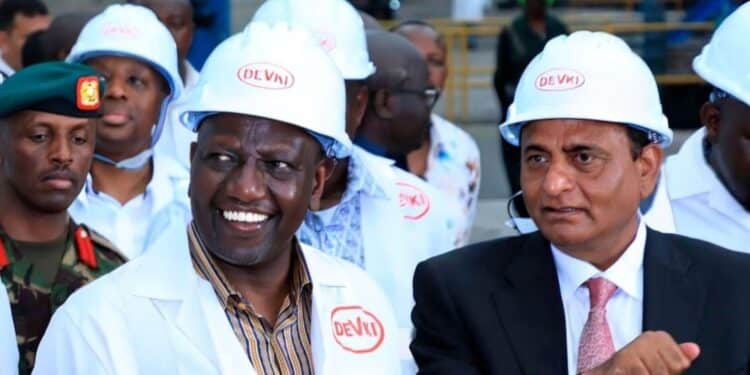
Did the bromance between President William Ruto and billionaire industrialist Narendra Raval quietly die?
That is the question doing the rounds in Nairobi’s political and business circles after Raval was conspicuously absent from Wednesday’s high-profile groundbreaking of Aliko Dangote’s massive refinery in Lamu.
The absence may mean nothing on its own. But highly placed sources familiar with the business conversations surrounding the two men say the relationship has cooled considerably.
The sources point to competing business interests, particularly in sectors where Raval’s Devki Group has built a powerful position, as part of the problem.
Neither State House nor Devki has announced a falling-out. But according to the grapevine, Raval is no longer in the President’s inner circle as he once was.
And the change is becoming increasingly difficult to miss.
From constant praise to silence
For years, Raval was one of Ruto’s most enthusiastic corporate supporters.
He repeatedly praised the President’s economic policies and, in 2024, said he wished Ruto could govern for 25 years.
In November 2025, he again praised Ruto while the President attended the groundbreaking of Devki’s $500 million steel project in Tororo, Uganda.
Ruto, in return, has appeared at several major Devki projects, including the Sh45 billion Cemtech clinker plant in West Pokot.
The two men appeared comfortable sharing industrial platforms.
That chemistry now appears less visible.
Raval has continued announcing major investments, but the presidential photographs and public praise that once accompanied them have become noticeably less frequent.
Then came Dangote
The timing has fuelled the speculation.
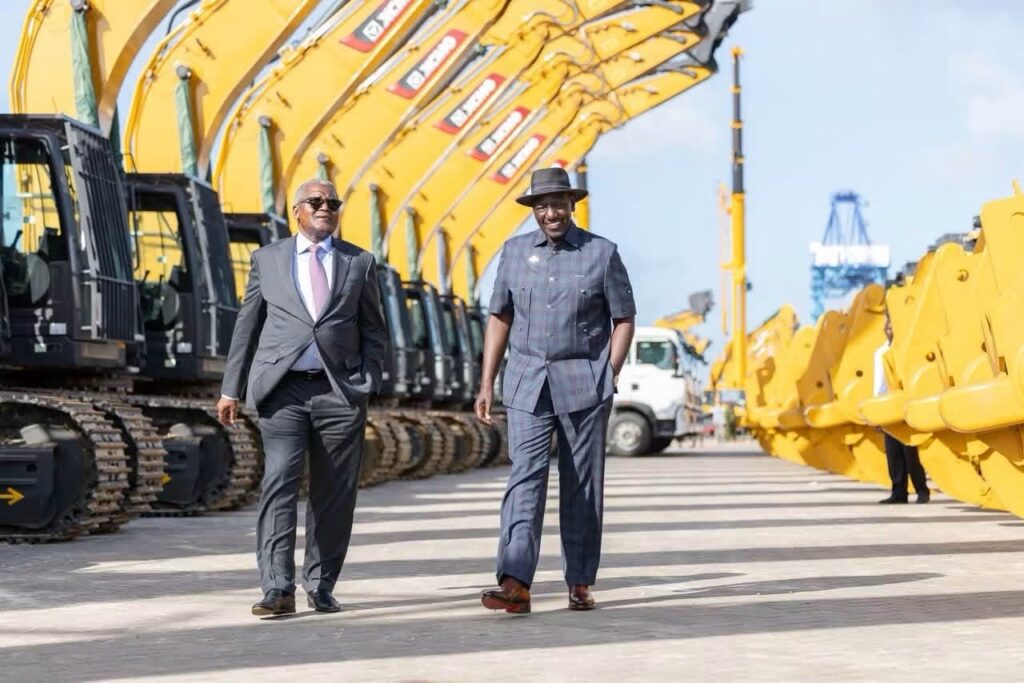
On September 25, Ruto toured Dangote’s refinery in Lagos and hailed it as a model for what Kenya’s Lamu project could become.
On September 29, Dangote spoke publicly about his failed attempt to establish a cement plant in Kenya, alleging that his company faced demands for kickbacks during the previous administration.
He recalled that Ruto, then Deputy President, personally drove him to President Uhuru Kenyatta so he could explain what had happened.
The following day, Ruto stood beside Dangote in Lamu and formally launched the refinery project.
Then came the number that caught the cement industry’s attention.
One million tonnes of cement.
Ruto said Dangote would require about one million tonnes to build the refinery and urged Kenyan cement manufacturers to double production.
Raval, whose Devki Group is one of Kenya’s largest cement and steel producers, was not in the official cast.
For Nairobi’s grapevine, that was the photograph to watch.
A lucrative market suddenly opens
One million tonnes is a huge construction-materials opportunity.
It puts Kenya’s cement producers in a race for one of the largest single industrial construction accounts in the region.
Devki’s Simba Cement is one of the major players.
So are Bamburi under Amsons, Mombasa Cement and other producers.
Ruto’s message was effectively that the industry should expand capacity to feed Dangote’s project.
The sources say this is where the relationship between Ruto and Raval has become complicated.
Their claim is that disagreements over business interests and government policy have created friction, particularly around cement, steel, construction materials, imports and major State-backed projects.
These remain off-the-record claims and have not been publicly confirmed by either side.
Raval’s growing industrial power
Devki has become a formidable industrial empire spanning steel, cement, clinker and mining.
The group recently broke ground on a new cement and clinker plant in Ngaaie, Kitui, reportedly worth more than Sh50 billion.
It is also preparing for the launch of its Taita-Taveta iron-ore processing plant, which Ruto is expected to attend in November.
That means the relationship is clearly not dead at the institutional level.
The question is whether the personal political closeness has changed.
And there are signs that it may have.
The levy and monopoly politics
Raval’s rise has coincided with government policies designed to encourage local production and discourage dependence on imported clinker and steel.
Raval has defended the policy as necessary industrial protection, arguing that Kenya should manufacture rather than create monopolies for foreign producers.
Critics, however, have argued that such policies can also strengthen established manufacturers that already possess integrated plants and supply chains.
That debate becomes more politically sensitive when one of the biggest beneficiaries is an industrialist who was once perceived to be exceptionally close to the President.
The “Ruto Gupta” label used by Raval’s political critics is political rhetoric, not a court finding.
But it illustrates how closely his business empire has become associated with the Ruto administration.
Did Dangote change the chemistry?
Dangote’s arrival may have changed the equation.
The Nigerian billionaire is bringing one of Africa’s largest private industrial investments to Kenya, and his refinery will require enormous quantities of cement, steel, logistics and other services.
Ruto now has another powerful African industrialist at the centre of his economic agenda.
And unlike the old Ruto-Raval industrial photographs, the defining Lamu image was Ruto and Dangote, shovel in hand.
Raval was missing.
No official explanation has been given.
The unanswered question
There is no public evidence proving that Ruto and Raval have fallen out.
Indeed, Ruto’s planned November appearance at Devki’s Taita-Taveta project points to continuing government engagement with the group.
But the public choreography has changed.
The constant praise has faded.
The joint appearances appear less frequent.
And when Ruto unveiled one of the country’s biggest industrial projects alongside Dangote and announced a one-million-tonne cement requirement, Raval was not there.
That is why the Nairobi grapevine is asking a simple question:
What went wrong between Ruto and Raval?
No one in either camp is answering publicly.
For now, the evidence is not a formal breakup.
It is a noticeable change in proximity, tone and political choreography.
And in Kenya’s business corridors, sometimes that is how a powerful relationship begins to unravel: not with a declaration, but with a missing man in the photograph.
There's no story that cannot be told. We cover the stories that others don't want to be told, we bring you all the news you need. If you have tips, exposes or any story you need to be told bluntly and all queries write to us [email protected] also find us on Telegram
