

Nairobi, Kenya – February 8, 2026 – Nairobi County Chief Officer for Citizen Engagement Geoffrey Mosiria has amplified a boda boda rider’s complaint against Mogo Auto Limited, accusing the microlender of unfair debt practices that trap borrowers in prolonged repayment cycles despite overpaying.
In a post shared on X on February 7, 2026, Mosiria quoted a detailed message from rider Michael Wesonga Otango, who took a KSh 70,000 logbook loan from Mogo in October 2024 to finance a Honda Ace motorcycle valued at around KSh 100,000. According to the agreement, the loan carried interest of KSh 57,140 over 52 weeks, for a total repayable amount of KSh 127,140.
Otango claims he has repaid KSh 132,264—including late-payment fines—yet Mogo maintains he owes an additional KSh 74,291. “They sent six people to repossess my motorcycle on January 10, 2026, forcing me to sell household items to pay KSh 15,680 and retrieve it,” Otango wrote. “Now they keep harassing me with calls—I even thought of burning the bike to end the stress.”
Mosiria, who has built a following by addressing public grievances, described the case as part of a broader pattern: “I have been receiving many complaints about companies that give boda bodas on loan, where riders allege that repayment amounts are increased unfairly and loan interests exaggerated, trapping them in endless debt instead of empowering them.” He called on the government to urgently regulate such lenders to protect hardworking Kenyans.
Several users offered pro bono legal assistance, while others referenced Kenya’s in duplum rule—which limits interest to the principal amount—and questioned the loan’s effective interest rate, estimated at over 80%.
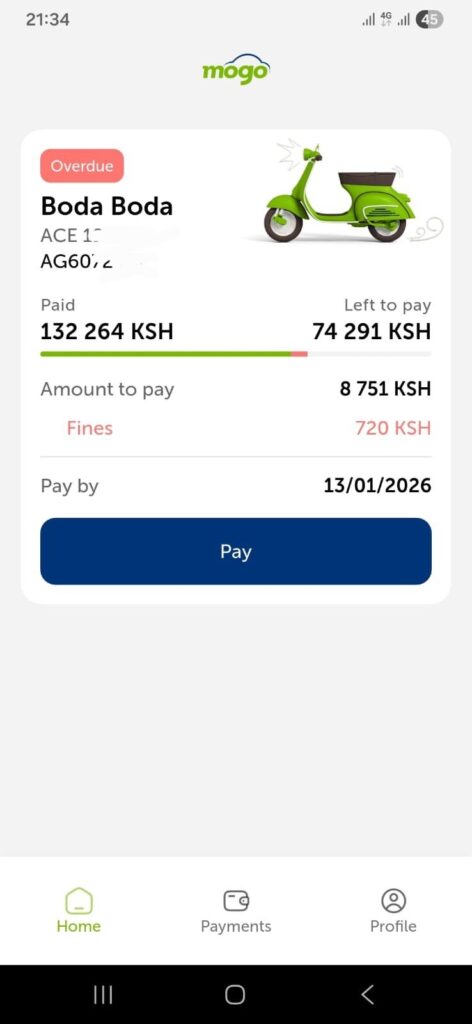
Mogo Auto Limited, a subsidiary of Latvia-based Eleving Group, provides asset financing for used vehicles and motorcycles, including boda bodas, with quick approvals often via mobile platforms. The company promotes flexible terms and transparency, but has faced repeated criticism in Kenya.
In October 2025, three borrowers—Caroline Nderitu, Wilson Mbogo Gikonyo, and Joseph Muraya Wangari—filed a class action lawsuit in the High Court of Nairobi, alleging predatory lending through misleading documentation, hidden fees, inflated insurance premiums, foreign-currency indexing that increases costs, and aggressive repossessions without due process.
The suit, representing potentially thousands of affected customers, cites a prior October 2024 fine of KSh 10.85 million imposed by the Competition Authority of Kenya (CAK) for “false, misleading and unconscionable” conduct, along with ordered refunds to specific complainants.
Similar grievances against Mogo and competitors like Watu Credit date back years, with accusations of tactics that trigger repossessions near the end of repayment periods or penalties tied to currency fluctuations.
The Central Bank of Kenya oversees digital and micro-lenders, requiring clear disclosure of total credit costs under consumer protection rules. Violations can result in penalties or license restrictions.
Mosiria’s intervention adds to growing public and regulatory pressure on the sector. The High Court has set hearings in the class action case, while Mogo has sought dismissal of the suit, arguing against certification as a class matter.
Neither Mogo Auto Limited nor the Central Bank of Kenya had issued immediate responses to the latest public allegations as of publication. For riders caught in similar situations, legal experts recommend documenting all payments and seeking advice from consumer protection bodies or advocates familiar with credit agreements.
There's no story that cannot be told. We cover the stories that others don't want to be told, we bring you all the news you need. If you have tips, exposes or any story you need to be told bluntly and all queries write to us [email protected] also find us on Telegram
