
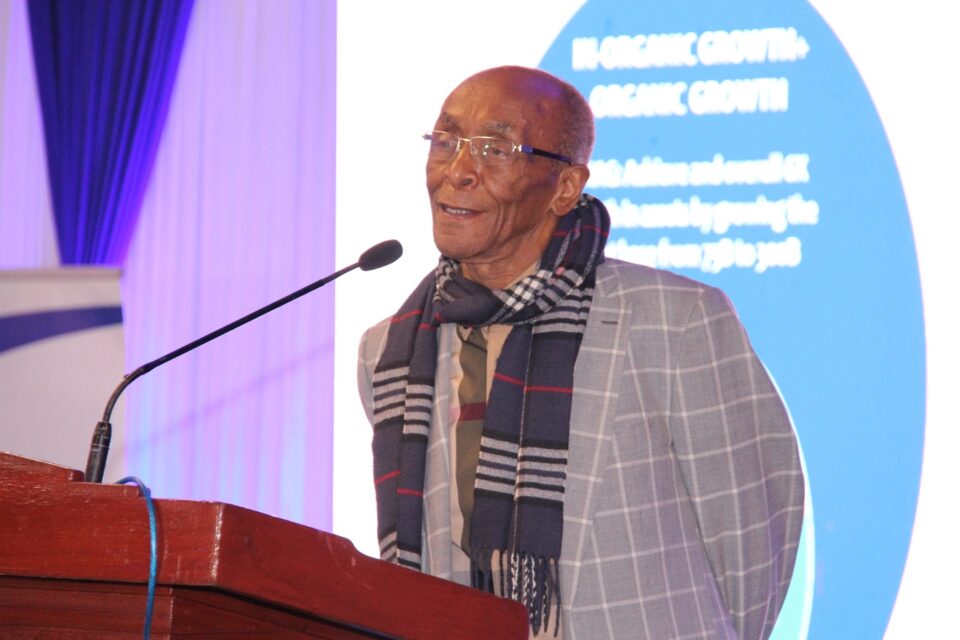
Nairobi, June 26, 2026 — When Family Bank finally rang the opening bell at the Nairobi Securities Exchange this week, the celebration marked more than the end of a four-decade journey from a small Kiambu building society to a publicly traded lender.
Behind the fanfare was a costly corporate transition that saw founder Titus Muya receive more than Sh231 million in ex gratia payments over two years as the bank prepared to enter public markets, raising fresh questions about governance, succession and the true cost of founder influence.
Family Bank’s 2025 annual report shows that Muya received Sh138.24 million in ex gratia payments in 2024 and another Sh93.13 million in 2025, bringing the total to Sh231.37 million. Once directors’ fees and allowances are added, his total remuneration over the two years exceeded Sh294 million.
Officially, the payments were recognition for decades of service. But their timing has become one of the most scrutinised aspects of Family Bank’s long-awaited listing.
The payouts coincided with the final stages of the bank’s transition into a listed company after years of stalled attempts, failed fundraising and growing investor concerns over governance.
Corporate governance experts have long argued that Family Bank’s greatest strength and greatest weakness was the same person.
Muya founded what was then Family Finance Building Society in 1984 and personally oversaw nearly every aspect of its operations during its formative years. Although he relinquished the chief executive position in 2006 and later stepped down as chairman in 2012, he remained on the board while continuing to wield enormous influence through his substantial shareholding and family-linked corporate interests.
That influence, critics say, contributed to a pattern of leadership instability rarely seen among Kenya’s major lenders.
Between 2006 and 2024, Family Bank cycled through five chief executives, averaging less than four years per CEO. While several executives delivered periods of impressive financial growth, none established the long-term continuity that characterised rivals such as Equity Group Holdings.
During the same period, Equity transformed itself into one of East Africa’s largest banking groups with assets exceeding Sh2 trillion, while Family Bank remained below Sh230 billion in assets despite starting their commercial banking journeys at roughly the same time.
The governance concerns became impossible to ignore in late 2023.
Family Bank sought to raise Sh9.3 billion through a rights issue to strengthen its capital base and support regional expansion. Existing shareholders subscribed for only Sh252 million, representing barely 2.7 percent of the target and leaving the exercise with a staggering 97 percent shortfall.
For many analysts, the failed capital raising exposed more than weak market conditions. It reflected declining confidence among investors already familiar with the institution’s ownership structure and governance history.
The fortunes of the bank changed only after a major institutional investor stepped in.
Standard Investment Bank’s Mansa-X Special Fund accumulated a significant stake in Family Bank and internally valued the shares at about Sh24.70 each, substantially above the Sh14.50 price rejected during the rights issue. That valuation helped restore investor confidence and paved the way for a private placement that raised Sh8 billion, comfortably exceeding its target ahead of the eventual listing.
While investors focused on the successful fundraising, another process was unfolding quietly.
As Family Bank prepared for life as a listed company, Muya’s ex gratia payments were approved and paid in two instalments across 2024 and 2025.
Unlike retirement benefits paid immediately after leaving office, these payments came more than a decade after Muya had ceased serving as chief executive and years after leaving the chairmanship.
That unusual timing has fuelled debate over whether the money simply rewarded long service or effectively facilitated the final governance transition required before the bank could successfully list on the stock exchange.
The annual report does not explicitly link the payments to the listing process, nor does it describe them as compensation for reducing influence. Instead, they are disclosed as ex gratia awards approved by the board.
Even after the listing, Muya’s influence has not disappeared entirely.
The founder and associated family entities still control about 35.67 percent of Family Bank’s shares, above the long-term regulatory ownership threshold of 25 percent. Although regulators granted temporary flexibility during the listing process, the family will eventually need to reduce its stake through future share sales.
Questions also remain about related commercial relationships.
Among them is the connection between Family Bank and Daykio Plantations, a real estate company founded by Muya that remains one of the bank’s largest shareholders. The property firm markets land packages supported by Family Bank mortgage financing, a relationship fully disclosed but likely to remain under closer scrutiny now that the lender is publicly traded.
Financially, Family Bank enters the public market from a position of strength.
The lender reported a record Sh5.38 billion profit after tax for 2025, representing growth of more than 55 percent. However, much of that performance was driven by elevated returns from government securities during a period of high interest rates rather than rapid expansion in private sector lending.
At the same time, gross non-performing loans climbed to Sh17.56 billion, highlighting continuing pressure within the bank’s SME-focused loan portfolio.
Investors will also be watching how the bank manages a Sh4 billion medium-term note maturing later this year, alongside the gradual reduction of the founder’s ownership stake and the first set of post-listing financial results.
For now, Family Bank’s stock market debut has delivered a new chapter in the institution’s history.
But the Sh231 million paid to its founder has ensured that the story of its transformation is about more than a successful listing. It has become a case study in the price institutions sometimes pay to move from founder-led enterprises into publicly owned companies, where governance, transparency and accountability are expected to outweigh legacy and personality.
There's no story that cannot be told. We cover the stories that others don't want to be told, we bring you all the news you need. If you have tips, exposes or any story you need to be told bluntly and all queries write to us [email protected] also find us on Telegram
