
For thousands of Kenyans, owning a car is sold as a symbol of progress. The bank finances the dream, the borrower drives away, and monthly installments become part of life.
What few borrowers fully appreciate is that behind every vehicle finance agreement lies a highly sophisticated recovery ecosystem designed to protect the lender when things go wrong.
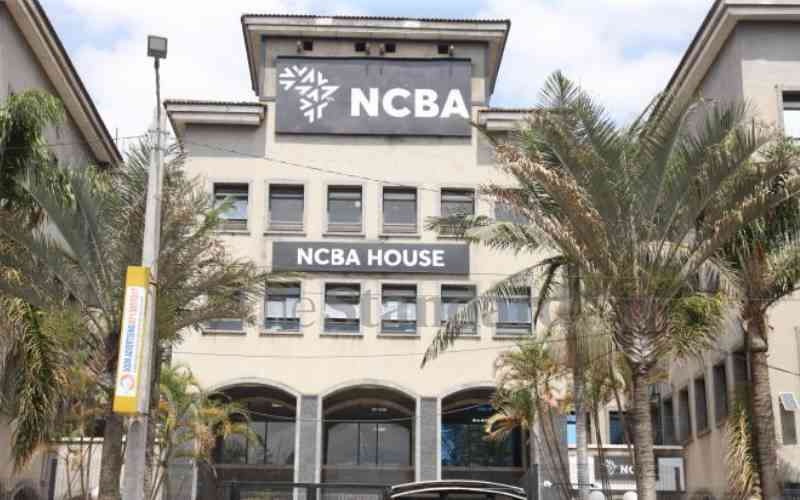
At the center of that ecosystem is NCBA Group, Kenya’s largest vehicle financier, a bank that has quietly built one of the country’s most powerful automotive finance and recovery networks.
The result is a business model that allows the lender to remain profitable even when a borrower loses the very asset they borrowed to acquire.
The question is not whether the model is legal. It largely is.
The question is whether most borrowers understand what they are signing up for.
One in Every Three Cars
NCBA has publicly stated that it commands roughly a third of Kenya’s vehicle and asset finance market, making it the dominant player in a sector that touches everyone from salaried professionals and SMEs to logistics companies and government contractors.
The bank’s asset finance products are marketed as fast, convenient and accessible, offering high financing ratios and extended repayment periods.
For many borrowers, the arrangement appears straightforward.
The bank lends money.
The customer buys a vehicle.
The customer repays the loan.
But that is only the beginning of the story.
Once a vehicle is financed, it becomes secured collateral under Kenyan law.
If repayments fall into arrears and statutory procedures are followed, the lender gains extensive enforcement rights over the asset.
That is where NCBA’s integrated ecosystem begins to reveal itself.
The Rise of CarDuka
In recent years NCBA has heavily invested in CarDuka, a digital automotive marketplace that allows buyers and sellers to transact vehicles online.
The platform has grown into a major automotive marketplace and forms part of NCBA’s broader digital strategy. The bank has publicly highlighted CarDuka’s importance in expanding its automotive ecosystem and customer reach.
On the surface, CarDuka looks like a standard vehicle marketplace.
Behind the scenes, however, it creates an unusual level of vertical integration.
A borrower obtains financing from NCBA.
The vehicle serves as security.
If the loan defaults, the vehicle can be repossessed.
The repossessed vehicle can then be disposed of through channels connected to the bank’s automotive ecosystem.
The new buyer may require financing.
The financing can again be provided by NCBA.
Insurance products can also be offered within the same ecosystem.
From a business perspective, it is an elegant structure.
From a borrower perspective, it means the institution sitting across the table is far more than a lender.
It is a lender, recovery agent, vehicle marketplace operator, insurer and potential financier for the next owner.
Kenya’s Repossession Laws Favor Speed
Much of the power behind modern vehicle recoveries stems from the Movable Property Security Rights Act.
The law significantly modernized secured lending in Kenya and gave lenders stronger tools to enforce collateral rights.
Unlike older systems that often required lengthy court battles, lenders can now enforce security interests through statutory processes provided proper notices are issued and legal procedures are followed.
For borrowers, this means repossession can move much faster than many expect.
Legal experts note that many vehicle owners only begin seeking advice after recovery proceedings are already underway.
By then, valuable time may have been lost.
Court decisions have increasingly recognized electronic communication as a valid means of serving notices in certain circumstances, meaning emails and digital messages can carry significant legal consequences. The broader trend in Kenyan jurisprudence has been toward recognizing electronic service where statutory requirements are met.
For borrowers who rarely monitor their email or who change phone numbers, this reality can become costly.
Losing the Car May Not End the Debt
Perhaps the least understood aspect of vehicle finance is what happens after repossession.
Many borrowers assume that once the vehicle is surrendered or recovered, the debt disappears.
That is often not the case.
If the sale proceeds fail to cover the outstanding loan balance, interest, fees and associated costs, the borrower may remain liable for the shortfall.
This is commonly known as a deficiency balance.
In practical terms, a borrower can lose the vehicle and still owe money.
The financial consequences may continue long after the auction has ended.
Industry lawyers say deficiency claims are among the most misunderstood features of secured lending in Kenya.
The Business of Recovery
NCBA’s financial performance helps explain why recovery efficiency matters.
The lender has consistently reported strong earnings and remains among East Africa’s most profitable financial institutions.
Strong recoveries reduce credit losses.
Reduced losses improve profitability.
Improved profitability supports shareholder value.
Investors view this as prudent risk management.
Borrowers often experience it differently.
To a bank, a defaulted vehicle is a recoverable asset.
To a borrower, it may represent years of savings, a family livelihood or a business operation.
The same event is viewed through two entirely different lenses.
Nedbank’s Billion-Shilling Bet
The significance of NCBA’s automotive ecosystem has become even more apparent following South African banking giant Nedbank’s move to acquire a controlling stake in the lender.
Nedbank announced plans to acquire approximately 66 percent of NCBA in a transaction valued at roughly KSh110 billion, positioning the Kenyan lender as a key pillar of its East African expansion strategy.
While much attention has focused on NCBA’s digital banking footprint and regional reach, the bank’s dominance in vehicle finance represents another major strategic asset.
A lender controlling a substantial share of the automotive finance market possesses something extremely valuable: direct access to one of the largest categories of secured consumer lending in the economy.
Questions Regulators May Eventually Face
None of this necessarily suggests wrongdoing.
NCBA’s business model operates within existing legal and regulatory frameworks.
Yet the structure raises broader policy questions.
Should a lender also control major channels through which repossessed assets are sold?
Should borrowers receive greater disclosure regarding post-repossession liabilities?
Should regulators examine whether vertically integrated lending ecosystems create conflicts that require additional oversight?
These are questions that become increasingly relevant as financial institutions evolve beyond traditional banking.
Read Before You Sign
The lesson for borrowers is remarkably simple.
Vehicle finance agreements are not merely loan contracts.
They are security agreements.
When borrowers sign them, they are granting extensive rights over an asset that may become critical to their personal and financial lives.
Before signing any vehicle finance facility, borrowers should understand four things.
First, repossession rights can be exercised far more quickly than many people assume.
Second, electronic notices may carry legal weight.
Third, losing a vehicle does not automatically extinguish the debt.
Fourth, the institution financing the vehicle may have an economic interest in multiple stages of the vehicle’s lifecycle beyond the original loan.
NCBA’s vehicle finance ecosystem represents one of the most sophisticated examples of vertical integration in Kenya’s banking sector.
For shareholders, it is a powerful business model.
For borrowers, it is a reminder that the most important part of a loan agreement is often the part nobody reads until it is too late.
There's no story that cannot be told. We cover the stories that others don't want to be told, we bring you all the news you need. If you have tips, exposes or any story you need to be told bluntly and all queries write to us [email protected] also find us on Telegram
