
For years, the account sat quietly in the banking system.
The Rural Outreach of Financial Innovations and Technologies (PROFIT) programme, a donor-backed initiative designed to help Kenya’s small-scale farmers access credit, had officially ended in December 2019. Its mission was complete. Its operations should have been winding down.
Instead, investigators now say the account became the gateway through which more than Sh1.55 billion in public and donor funds was allegedly siphoned from the National Treasury in one of the most audacious financial scandals to emerge in recent years.
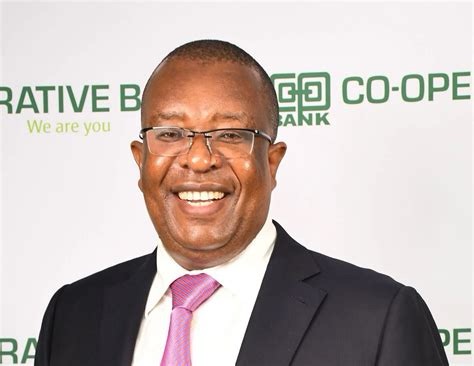
At the centre of the controversy is Co-operative Bank of Kenya, the institution that held the programme’s account and processed transactions that investigators say should have triggered immediate scrutiny under anti-money laundering and compliance rules.
The scandal has exposed what financial crime experts describe as a dangerous gap between regulatory requirements and actual enforcement inside Kenya’s banking system.
According to court filings and investigations by the Ethics and Anti-Corruption Commission (EACC), officials allegedly orchestrated the fraudulent release of more than Sh1.379 billion from the National Treasury into the PROFIT account using forged payment documents and fictitious expenditure claims.
Once the money landed in the account, it allegedly moved with remarkable ease.
Investigators say former programme accountant Billy Otieno Obango withdrew Sh799.8 million in cash from the account. Other funds were allegedly channelled through private entities, including 020 Investments Limited, before finding their way into real estate and other high-value assets.
The EACC has since frozen several properties believed to have been acquired using proceeds linked to the scheme, including the Skyline Hotel in Eldoret.
What has shocked observers is not merely the scale of the alleged theft but the apparent absence of intervention before investigators stepped in.
Banking regulations exist specifically to detect unusual transactions before money disappears.
A dormant account linked to a programme that had officially closed suddenly receives more than Sh1.3 billion. A single individual withdraws nearly Sh800 million in cash. Funds begin moving into entities allegedly linked to asset purchases.
To compliance professionals, those are not subtle warning signs. They are the kinds of transactions that modern anti-money laundering systems are designed to identify and escalate.
The PROFIT scandal has therefore reignited concerns about Co-operative Bank’s compliance culture, particularly given its previous encounters with regulators.
In 2018, the Central Bank of Kenya fined the lender Sh20 million over anti-money laundering shortcomings connected to the National Youth Service scandal. Regulators cited weaknesses involving customer due diligence, transaction monitoring and reporting obligations.
Although the two scandals involve different actors and circumstances, critics argue that both expose a recurring problem: the failure to identify and stop suspicious movement of public funds before massive losses occur.
The implications stretch far beyond one bank.
Kenya remains under increased monitoring by the Financial Action Task Force, the global watchdog overseeing anti-money laundering compliance. The country’s ability to exit the grey list depends heavily on demonstrating that financial institutions can detect, report and prevent suspicious transactions effectively.
Cases such as the PROFIT scandal undermine that effort.
Every major corruption-related banking controversy damages Kenya’s reputation among international lenders, development partners and correspondent banks. The result is often stricter oversight, higher compliance costs and greater scrutiny of transactions originating from the country.
Ultimately, however, the greatest loss is borne by ordinary Kenyans.
The funds at the centre of the scandal were intended to support farmers in rural communities, expand access to credit and improve livelihoods in areas that depend heavily on agricultural production. Instead, investigators allege that a substantial portion of the money was diverted into private hands.
The EACC is pursuing asset recovery and the courts have frozen several properties connected to the case. Yet the scandal has left behind larger questions that remain unanswered.
Why did a programme account remain active years after the project had officially closed? What safeguards were in place to monitor transactions flowing through the account? Were any internal alerts generated when hundreds of millions of shillings began moving through the banking system? And if warning signs existed, why were they not acted upon?
Those questions now sit at the heart of a scandal that has become about far more than a single theft.
It is a test of whether Kenya’s financial institutions can genuinely serve as the first line of defence against corruption, or whether billions in public and donor funds can still move through the system unnoticed until investigators arrive long after the money is gone.
There's no story that cannot be told. We cover the stories that others don't want to be told, we bring you all the news you need. If you have tips, exposes or any story you need to be told bluntly and all queries write to us [email protected] also find us on Telegram
