
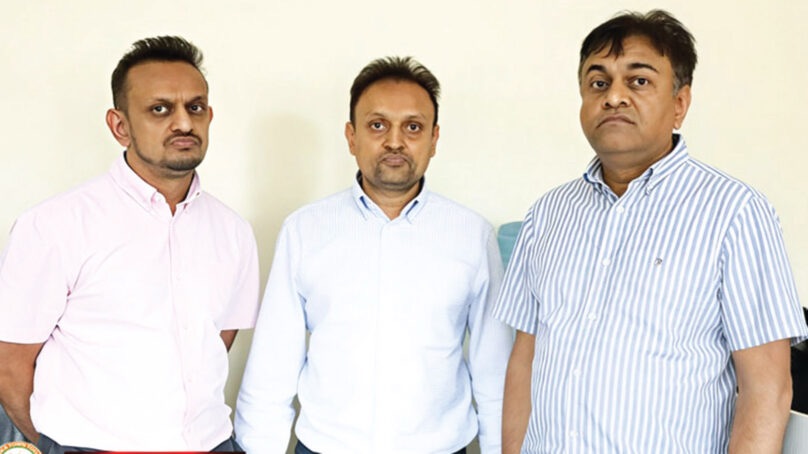
For more than a decade, Harish, Bharat and Ashvin Ramji lived under the shadow of allegations that threatened to strip them of a Sh350 million piece of land in Mavoko and destroy their reputation in the process.
Today, after a string of court victories culminating in the collapse of Mombasa Cement’s bid to take the matter to the Supreme Court, the brothers are no longer defending themselves. They are going on the offensive.
The three businessmen are now preparing private criminal proceedings against directors of Mombasa Cement over alleged trespass on the disputed 7.4-acre parcel, marking a dramatic reversal in one of Kenya’s longest-running and most contentious land battles.
The dispute, which began in 2010, has evolved into a case study of how wealth, corporate power and prolonged litigation can shape the fate of high-value land disputes in Kenya.
At the centre of the storm stood Mombasa Cement, the cement giant founded by the late billionaire Hasmukh “Hashu” Patel. For years, the company fought aggressively to retain its claim over the land known as LR No. 11895/50 in Mavoko.
Both Mombasa Cement and the Ramji brothers claimed to have acquired the property from the National Social Security Fund. What followed was a legal war that stretched across multiple courts and consumed more than 14 years.
The brothers lost at the Environment and Land Court in 2019, appearing to hand a major victory to the cement manufacturer. Yet the battle was far from over.
In a landmark turnaround, the Court of Appeal overturned the earlier ruling and found in favour of the Ramji brothers, concluding that discrepancies cited by Mombasa Cement in ownership documents amounted to clerical errors rather than evidence of fraud. The appellate judges further held that the root of acquisition carried greater legal weight than the technical discrepancies relied upon by the cement company.
That judgment would prove devastating for Mombasa Cement’s case.
The company escalated the fight to the Supreme Court, hoping to secure a final reversal. Instead, the country’s highest court shut the door. In March 2025, the Supreme Court dismissed Mombasa Cement’s application, effectively affirming the Court of Appeal’s findings and cementing the Ramji brothers’ status as lawful owners of the land. (jibudocs.com (https://www.jibudocs.com/public/summaries/3dbc3a75-02e5-1714-227f-87efcb2f646b?utm_source=chatgpt.com))
For the Ramjis, however, victory in the civil courts was only part of the story.
Even after appellate rulings appeared to settle the ownership question, the brothers found themselves facing criminal investigations and prosecution over allegations linked to the same parcel.
Their arrests triggered fresh controversy.
The brothers argue that the criminal process sought to resurrect issues already determined through the courts. Their constitutional petition accuses state agencies of violating their rights through arrests, public exposure and prosecution despite previous court decisions touching on the ownership dispute.
The case has since become a broader debate about the intersection between civil litigation and criminal prosecution in commercial land disputes.
The Ramjis are seeking hundreds of millions of shillings in damages, arguing that their reputations and businesses suffered immense harm during years of legal uncertainty.
Behind the legal drama lies a larger question that continues to haunt Kenya’s land sector.
How does a dispute over a single parcel of land survive for more than a decade, pass through multiple courts, generate criminal investigations and still leave lingering questions about accountability?
Critics of the system argue that prolonged litigation often favours parties with deep pockets and the resources to sustain endless legal battles. By the time a final judgment arrives, reputations have been damaged, businesses disrupted and fortunes spent.
The Mavoko dispute has unfolded against the backdrop of broader controversies involving Mombasa Cement.
Over the years, the company has faced public disputes over land claims, including complaints raised by residents in parts of Kilifi County regarding ownership and occupation of land. While not all accusations resulted in adverse court findings, they contributed to a growing perception that the company frequently found itself at the centre of contentious land battles.
The Patel family has simultaneously cultivated a public image built on philanthropy and high-profile charitable activities. The late Hasmukh Patel was celebrated for major donations to communities across the Coast region and beyond.
Yet critics argue that philanthropy and corporate influence often create powerful public shields that can overshadow difficult questions surrounding business conduct and land acquisition disputes.
That contrast has become even more striking in recent months.
As members of the Patel family hosted lavish weddings that attracted celebrities and dominated society pages, the legal consequences of the Mavoko dispute continued to unfold in courtrooms.
For the Ramji brothers, the story is no longer about proving ownership.
That battle has largely been won.
Their focus has shifted to accountability.
They now want courts to examine not only the land dispute itself but also the arrests, prosecutions and actions that followed years after the ownership question had been litigated.
Whether those efforts succeed remains uncertain.
What is clear is that one of Kenya’s most powerful corporate families is now confronting a reality that seemed almost unthinkable when the case began.
After 14 years of court battles, the men once portrayed as suspects have emerged with judicial vindication, while the corporate giant that pursued them through every available legal avenue finds itself increasingly on the defensive.
The final chapter of the Mavoko land war has not yet been written.
But the balance of power has unquestionably shifted.
There's no story that cannot be told. We cover the stories that others don't want to be told, we bring you all the news you need. If you have tips, exposes or any story you need to be told bluntly and all queries write to us [email protected] also find us on Telegram
