
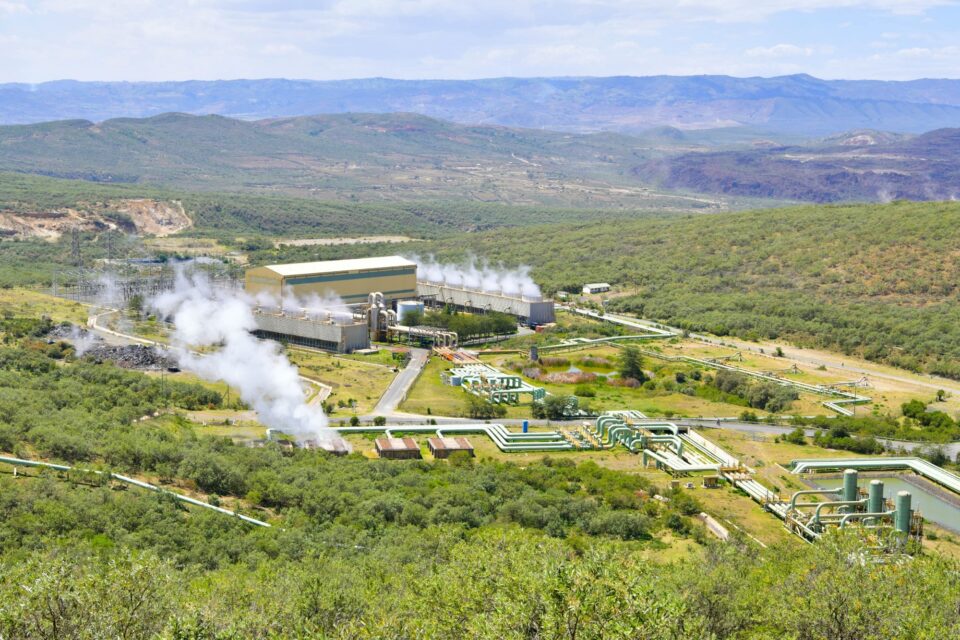
The European Investment Bank has delivered what amounts to a damning verdict on the integrity of a multi-billion shilling procurement at Kenya’s state power generator KenGen, quietly refusing to issue the mandatory clearance that would have allowed a consultancy contract for the Sh32 billion Olkaria VII geothermal power plant to proceed. The refusal, made in January 2026, set off a chain reaction that has since wound through the courts and culminated in a High Court judgment that has effectively shut down the entire tender and exposed a procurement process riven with irregularities at the very top of KenGen’s supply chain function.
Nairobi Exposed has established that the EIB’s withholding of its so-called “no objection” letter was not a routine administrative delay. Under the financing framework governing the Olkaria VII project, the EIB’s approval was a condition precedent, meaning nothing could move forward without it.
When the bank declined to provide that clearance after KenGen submitted its recommended award in January 2026, it effectively communicated, through silence and institutional caution, that something was wrong with what KenGen had done.
What KenGen had done was award a contract worth approximately Euros 18.16 million, roughly Sh2.7 billion, to Italian firm ELC Electroconsult SPA, despite that firm having quoted the highest price among the competing bidders. The winning firm beat out a joint venture of Sintecnica Engineering S.R.L and Steam S.R.L, which had offered to deliver the identical scope of work for Euros 16.79 million, or about Sh2.49 billion. The differential was more than Sh200 million of Kenyan public money, and it went in the wrong direction.
The Procurement Board Smelt a Rat
The Public Procurement Administrative Review Board had already intervened before the EIB’s refusal crystallised the full picture. In a ruling delivered on June 11, 2025, the board cancelled KenGen’s award to ELC Electroconsult after finding that the evaluation committee had behaved in ways that defy straightforward explanation.
The board concluded that the committee had introduced undisclosed sub-criteria into its technical scoring, meaning it invented new standards for judging bids that were never published in the tender documents and were therefore unknown to competing firms. The same committee then applied a comparative methodology that the tender document had never anticipated, and denied scores to bidders who had fully met all stated requirements.
The practical effect of these manoeuvres was that ELC Electroconsult, the most expensive firm, walked away with a combined score of 91.2 percent, while the cheaper Sintecnica and Steam joint venture received only 78.43 percent.
Matteo Quaia, chief executive of Steam and a party to the joint venture, told the court that the board’s own investigation had found both losing bidders should have scored 77.6 marks out of 80 on technical evaluation, a score that would have made them fully competitive at the financial stage, where their lower price would have been determinative.
For a procurement watchdog, these findings amounted to an explicit accusation that the evaluation committee had rigged the scoring. The criteria were invented after the fact to engineer a predetermined outcome. The question that has never been answered publicly is who inside KenGen instructed the evaluation committee to produce those results, and what relationship, if any, existed between those individuals and ELC Electroconsult.
Enter Vincent Mamboleo
As KenGen’s Acting General Manager for Supply Chain, Vincent Mamboleo sits at the apex of the institution’s entire procurement operation. Under the Public Procurement and Asset Disposal Act, a procuring entity’s supply chain division bears direct accountability for the integrity of tender processes, including the constitution and conduct of evaluation committees.
Mamboleo oversaw the department responsible for running the Olkaria VII consultancy tender from its launch in September 2024 through to the contested award in March 2025.
When the procurement board cancelled that award and directed a fresh evaluation, Mamboleo did not accept the finding that his department’s committee had acted improperly. He did the opposite. He filed an affidavit in the High Court asserting that the board had overstepped its powers, claiming it had introduced scoring methodology not in the tender document and that its directive to re-evaluate amounted to a predetermined result that reduced the evaluation committee to a mere rubber-stamping function.
The irony of a supply chain head accusing an oversight body of predetermining winners while defending an evaluation process that an independent board had already found to be compromised was lost on no one following the case closely.
Mamboleo joined KenGen in 2017, having previously held roles at Kwale International Sugar Company, Lafarge East Africa’s Bamburi Cement operation, Nation Media Group and Tata Chemicals.
He holds both a bachelor’s and master’s degree in business administration alongside a Professional Diploma in Purchasing and Supplies from the Chartered Institute of Purchasing and Supply in the United Kingdom. On paper, the man running Kenya’s largest power generator’s procurement function carries credentials that should make irregularities of this kind impossible.
In practice, the Olkaria VII episode raises serious questions about what happened on his watch.
KenGen has not publicly explained why, if the evaluation was conducted properly, the EIB then declined to endorse the outcome.
The bank’s procurement guidelines require it to assess not merely procedural compliance but the substance and fairness of evaluations. Its refusal to issue a no-objection letter in January 2026 suggests it found the process wanting in ways that went beyond technicality. Neither the EIB nor KenGen has offered a public account of what specifically triggered the refusal.
The Court Shuts the Door
When KenGen terminated the tender after the EIB’s refusal, the Sintecnica and Steam joint venture, which had been ordered by the procurement board to be reconsidered, challenged that termination before the review board.
The board sided with the joint venture in February 2026, finding that KenGen had not sufficiently justified the cancellation and ordering the procurement to proceed to its conclusion. KenGen took the matter to the High Court.
Justice John Chigiti, who had earlier handled earlier stages of the dispute, delivered a judgment that comprehensively vindicated KenGen’s termination while simultaneously laying bare the fundamental absurdity of the situation that KenGen’s own procurement conduct had created.
The court found that the EIB’s no-objection was a mandatory condition precedent under the financing framework. Without it, there was no money, and without money, there could be no contract execution. The board had erred by treating the donor’s requirement as optional when the tender documents made it explicit and non-negotiable.
The judgment noted with particular force that the board had exceeded its jurisdiction by interrogating the EIB’s decision.
The EIB’s mandate under the financing agreement places its concurrence decisions within a contractual space that a domestic procurement tribunal has no authority to second-guess. The court was explicit that the absence of EIB approval meant the tender could not legally progress regardless of other funding channels available for the wider Olkaria VII project.
“Funding for the overall project does not equate to availability of financing for this particular tender,” the judgment stated, a rebuke directed at the board’s attempt to argue that because the Sh32 billion plant had multiple co-financiers including Japan and the Kenyan government, the EIB’s specific refusal was not fatal.
The court said it was, and that compelling KenGen to proceed without confirmed financing would expose the public entity to unlawful financial commitments in violation of constitutional principles on the prudent use of public funds.
A Pattern Deeper Than One Contract
The Olkaria VII saga did not emerge in a vacuum. KenGen’s procurement function has attracted scrutiny across a string of high-value contracts at its Olkaria complex over the years. In 2021, the High Court blocked KenGen from awarding a tender worth close to Sh1 billion for improvement of the circulation water system at Olkaria II.
In 2024, the Court of Appeal nullified a Sh1.13 billion tender for the connection of make-up wells to the Olkaria geothermal power plant, finding that the evaluation committee had awarded the contract to a bidder who had failed to comply with a mandatory bid term. These were not isolated stumbles.
They were part of a recurring procurement pathology at an institution that manages billions of shillings in public contracts annually.
The EIB, which has co-financed KenGen’s geothermal expansion since the 1980s and whose loans have supported plants from Olkaria I through to Olkaria IV, is not an institution that withdraws its approval lightly. Its procurement guidelines exist precisely to prevent the kind of post-award manipulation the review board found in the Olkaria VII evaluation.
The fact that the bank chose not to endorse a process that KenGen had formally submitted for approval sends a signal that institutional backers of Kenya’s energy infrastructure are watching closely and that they found what they saw at Olkaria VII troubling enough to walk away.
For Mamboleo, the court ruling may have spared KenGen from having to execute an unlawful contract, but it has not answered the more uncomfortable question of why a procurement process overseen by his division produced an evaluation that independent scrutiny found to be manipulated.
His affidavit attacking the review board stands in the record as the official response of KenGen’s supply chain leadership to a finding that its own committee invented criteria and denied rightful scores to legitimate bidders. That is a remarkable position for a professional of his standing to have taken in open court.
Project Now Frozen, Timeline Shattered
With the High Court judgment restoring KenGen’s termination and the EIB’s position unchanged, the consultancy contract for Olkaria VII has no legal path to award.
The project itself, which Cabinet approved in July 2025 and which was targeting commissioning of the first turbine by June 2027, faces an indefinite delay. Kenya’s electricity demand reached a record peak of 2,444 megawatts in January 2026 and continues to climb, driven by industrial growth, an expanding electric vehicle sector and cross-border trading commitments under the Eastern Africa Power Pool.
Each month the Olkaria VII consultancy remains frozen is a month the plant’s construction timeline slips.
Unless the EIB reverses its position, new financing arrangements are secured for the consultancy component, or KenGen re-tenders the contract under a structure that satisfies the bank, the 80.3-megawatt plant may not arrive anywhere near its stated completion date.
The irony is that KenGen spent months fighting in court to protect an award that its own donor had already rejected.
The energy Kenya urgently needs from Olkaria VII is being held hostage to a procurement scandal that should never have been allowed to reach this point.
Questions sent to KenGen seeking comment from Vincent Mamboleo and the company’s media office on the EIB’s specific reasons for refusing the no-objection letter, the identity of evaluation committee members, and whether any internal investigation has been initiated had not received a response by the time of publication.
There's no story that cannot be told. We cover the stories that others don't want to be told, we bring you all the news you need. If you have tips, exposes or any story you need to be told bluntly and all queries write to us [email protected] also find us on Telegram
